Wildlife You Might See On A Winter Yellowstone Snowmobile Tour
What wolves, bison, elk and other animals you can realistically spot on a guided winter snowmobile tour in Yellowstone, where guides stop, and which tours run the best wildlife routes.
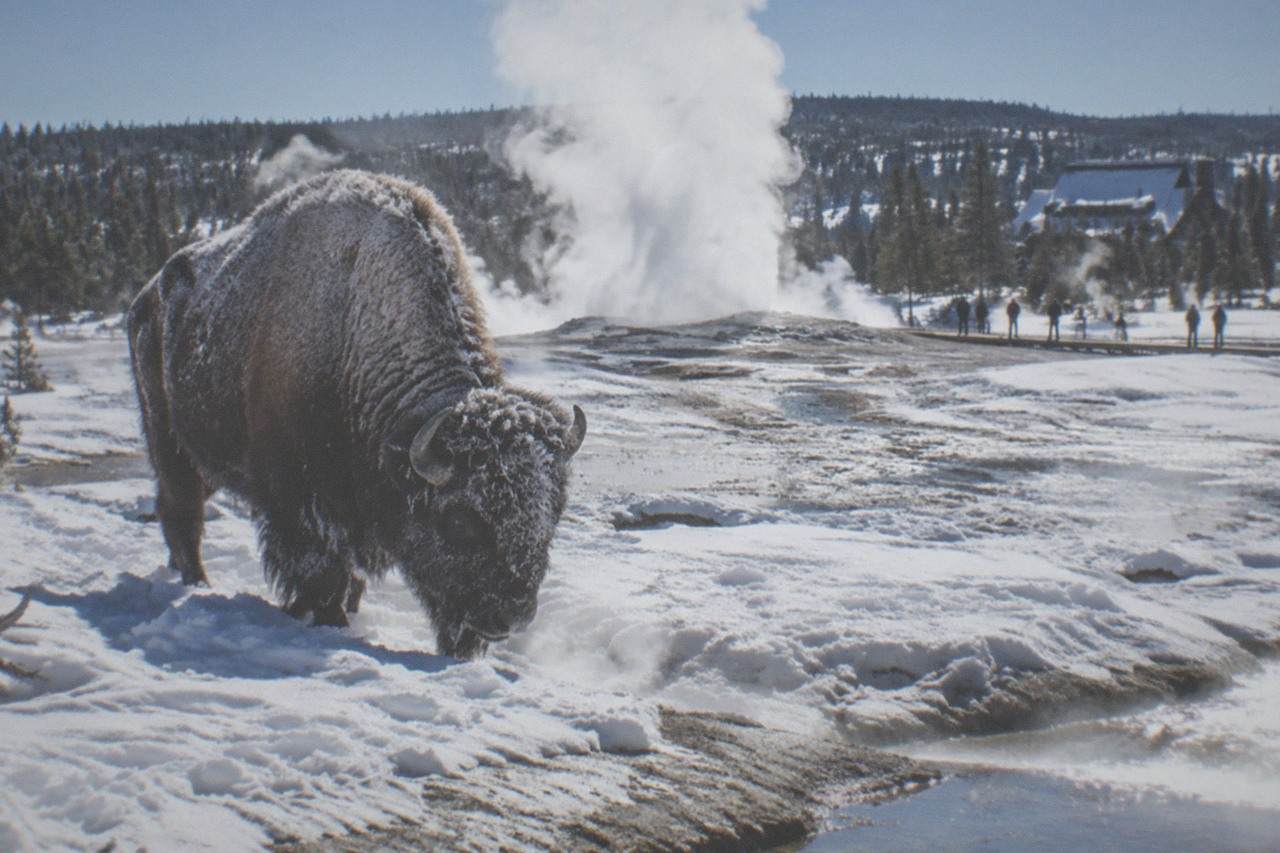
Winter changes Yellowstone from a crowded summer park into a quiet, snowbound wildlife sanctuary, and a guided snowmobile tour is one of the only ways into it. Between mid-December and mid-March, most interior roads are closed to private cars and open only to guided oversnow travel, which means the people watching wolves in Hayden-style valleys or bison steaming beside geysers are almost all on snowmobiles or snowcoaches. Snow makes animals easier to see, tracks easier to read, and the whole corridor quieter than at any other time of year.
Wildlife You Might See On A Winter Yellowstone Snowmobile Tour
The realistic list on a guided winter tour is bison, elk, wolves, coyotes, foxes, bighorn sheep, otters, trumpeter swans, bald eagles and ravens, with bison and elk nearly guaranteed along the groomed road corridors. Wolves are a genuine possibility but never a promise, since the park's entire population is under 84 animals. Guides on the Old Faithful and Canyon routes consistently report the most sightings along the Madison, Firehole and Lewis corridors.
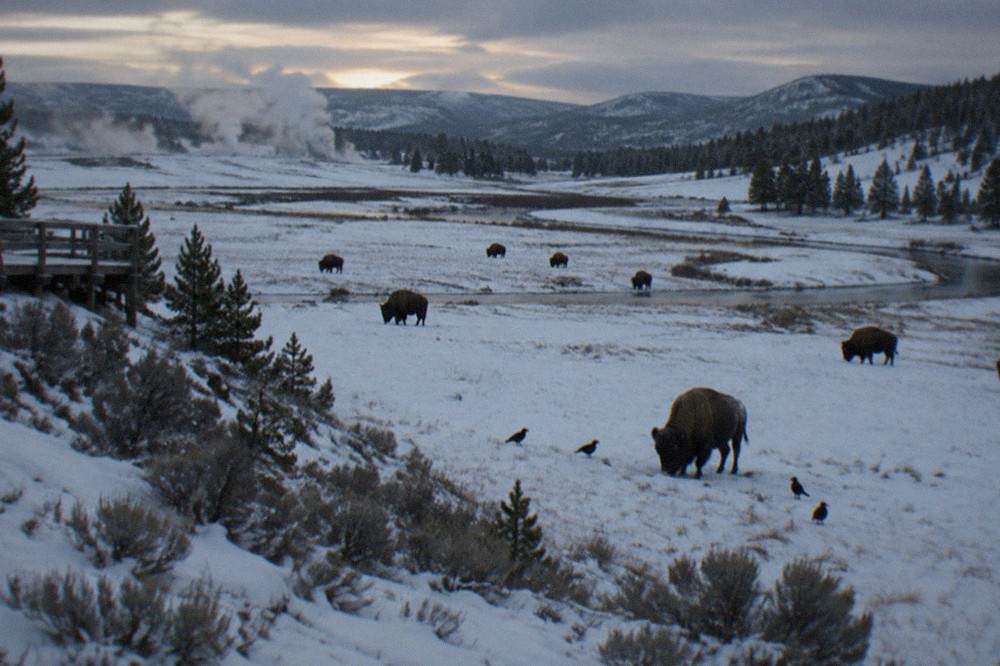
Bison are the anchor species of any winter trip. They congregate in herds along the groomed roads and around thermal basins, because the warm ground keeps snow shallow and forage easier to reach. On a snowmobile tour, it is common to ride within sight of a herd of a hundred or more animals, their frost-covered humps standing out against the snow. Riders on the Old Faithful route from the South Entrance typically pass bison near Lewis Falls and again in the Firehole corridor, where the animals stand in the steam of hot springs to conserve energy.
Elk move lower in winter and gather near the northern range and the entrances, but smaller bands appear along the southern snowmobile route too. Their tracks crisscross the groomed roadbeds, and guides point out where herds have been feeding by the churned-up snowfields they leave behind. Bighorn sheep favor steep, wind-scoured slopes where the snow cannot build up, so the canyon sections of the park are the place to scan for them.
Then there are the predators. Wolves are the sighting every rider hopes for, and winter is statistically the best time: dark animals against white snow, no foliage, and packs following the elk and bison. A January 2026 park wolf update counted the Wapiti Lake pack at 18 or more animals working the Hayden Valley and Firehole areas, with the Rescue Creek pack at roughly 16 around Blacktail Plateau and Tower. Neither spot is on the southern snowmobile corridor, but wolf tracks, kills and the occasional passing animal are reported along the interior groomed roads every season.
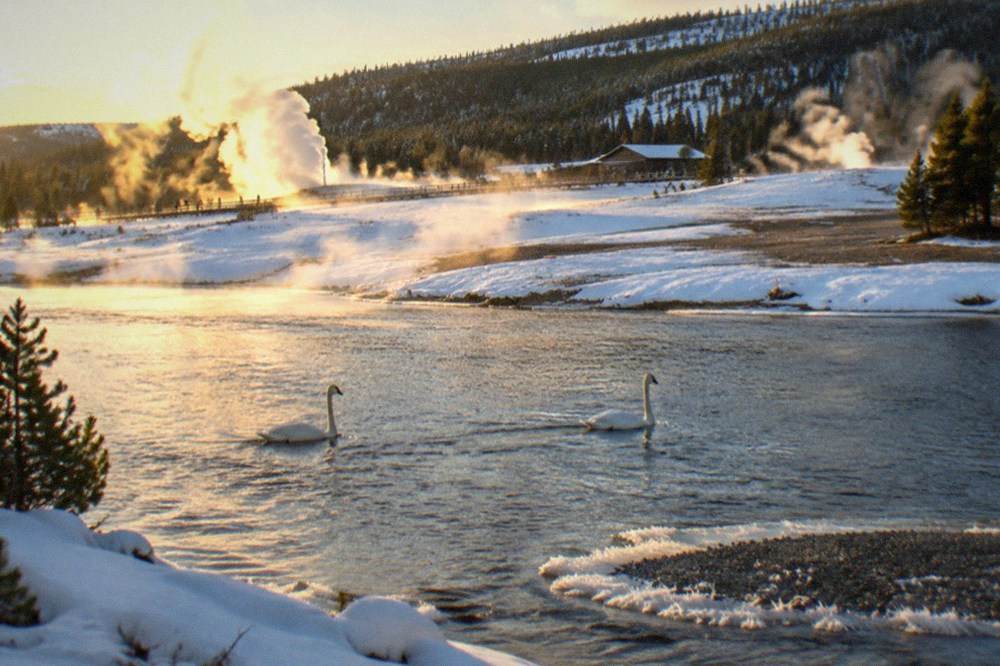
Coyotes and foxes are far more frequently seen than wolves, usually hunting mice under the snow with that unmistakable pounce. River otters work the open water near thermal-influenced streams, and trumpeter swans, bald eagles and ravens round out the bird list. Ravens in particular follow the tours, riding the updrafts and gathering wherever wolves or humans have been.
Why Winter Snow Makes Yellowstone Wildlife Easier To Spot
Snow, bare trees and no crowds turn the odds heavily in a viewer's favor. Dark animals stand out against white ground at remarkable distances, tracks record every movement along the groomed roads, and winter visitation is a fraction of summer, with January historically running under one percent of the park's annual visits. The trade-off is cold and short days, which concentrate animals into predictable thermal and valley areas.
The visitation numbers explain a lot. Park statistics from the 2014 to 2018 baseline show January averaging roughly 28,837 recreation visits against summer peaks many times that size, and the pattern has held since. In practical terms, the boardwalks at Old Faithful that hold thousands in July hold a few dozen in February, and the animals respond to that quiet. Bison that would never tolerate a line of cars will stand beside a warming hut in winter.
Snow also works as a tracking sheet. A guide who reads the roadbed can tell you whether the wolf tracks crossing the trail this morning were heading toward or away from a kill, where the otter slid into the stream, and which meadow the elk herd cleared out of overnight. That reading is one of the quiet skills a commercial guide brings that a renter on national forest trails outside the park does not get, and it is a real reason the guided snowmobile tour inside Yellowstone commands the price it does. For a fuller comparison, see our guided versus self-guided Yellowstone snowmobile tour breakdown.
Cold itself shapes the sightings. With average winter highs of 20 to 30°F and lows between 0 and 9°F, animals manage energy carefully, so they move at first light and again toward dusk, and spend midday near heat. That is exactly the rhythm a full-day tour follows: riders are on the trail by mid-morning, and the midday stop at Old Faithful often coincides with the wildlife lull. The park's winter ecology page describes this season of adaptation in detail.
| Species | Where on a tour route | Winter behavior to watch for |
|---|---|---|
| Bison | Firehole corridor, thermal basins, South Entrance road | Herds near hot springs and groomed roads; frost on humps |
| Elk | Near entrances, northern-range edges, Lewis meadows | Bands in wind-scoured feeding areas, heavy tracks |
| Wolves | Hayden Valley area, Firehole corridor, chance anywhere | Tracks and kill sites; rare direct sighting |
| Coyote and fox | Open meadows anywhere on the route | Mousing pounces into deep snow |
| Bighorn sheep | Steep canyon slopes on the Canyon route | Wind-blown rocky terrain, small groups |
| Otters | Open water near thermal streams | Slides and fishing in unfrozen water |
| Swans, eagles, ravens | Madison and Firehole rivers, over herds | Open-water gatherings; ravens following tours |
Which Yellowstone Tours Give You The Best Odds
The two in-park snowmobile routes from Jackson, Old Faithful and the Grand Canyon of the Yellowstone, cover the strongest wildlife corridors, and both run roughly a full day from hotel pickup in the Jackson area through the South Entrance. The Old Faithful tour is from $475 and rated 4.6 across 338 reviews. Near-park options in Jackson Hole trade park wildlife for forest riding at lower cost.
The Yellowstone Old Faithful Full-Day Snowmobile Tour from Jackson Hole is the classic wildlife-plus-geyser day. It runs about 10 to 12 hours door to door: a pickup around 6 to 7 a.m. in the Jackson area, a van ride roughly 60 miles to the South Entrance, outfitting with suit, helmet and boots, then a groomed-road ride of roughly 45 to 90 miles round trip with stops at Moose Falls, Lewis Canyon, West Thumb and the Fountain Paint Pots before a timed arrival at Old Faithful. The eruption interval runs a median of 102 minutes plus or minus 10, which is why guides plan the day around it, and you can read more in whether you can see Old Faithful erupt in winter.
The Grand Canyon of the Yellowstone route covers different country: the canyon walls, the Lower Falls with their ice formations, and the Hayden Valley approaches that the wolf update flagged as Wapiti Lake pack territory. Note that some upper platforms at Artist Point and the falls brinks are closed to all winter visitors under concession operating plans, but the main viewpoints are the reward of the day. This tour runs about 12 hours from Jackson-area hotel pickup, with a 6 a.m. start. Availability for the coming winter should be confirmed before you plan around it.
The snowcoach alternative deserves a mention for wildlife watchers. The Old Faithful snowcoach tour from Jackson Hole follows similar southern-corridor timing in a heated vehicle, from $450, rated 4.8 across 227 reviews, which suits photographers who would rather shoot through a window than grip handlebars. Its availability for the season should also be checked on the live listing. Between sled and coach, the snowmobile tour buys you the ride itself; the snowcoach buys you warmth and steady glass.
A third option is not a Yellowstone tour at all, and honest copy should keep the line clear. The Heart Six Snowmobiling in Jackson Hole trip, from $360 and rated 4.8 across 50 reviews, runs about four hours in the Bridger-Teton National Forest from Moran, outside the park. Riders see moose and occasional elk rather than thermal-basin bison, but it is the cheapest real seat near the region and fits a half-day schedule. Our Jackson Hole Yellowstone snowmobile tours guide sorts the in-park and near-park options in full.
Where Guides Actually Stop For Wildlife On The Old Faithful Route
Guides build the day around a handful of proven stops: Moose Falls and the Lewis River canyon shortly after the South Entrance, the West Thumb Geyser Basin overlook, bison-heavy stretches of the Firehole corridor, and the Fountain Paint Pots boardwalk, with Old Faithful as the anchor. Stops are short and road-adjacent by rule, since oversnow travel is confined to the groomed roadbed and fixed travel hours.
The first wildlife moment usually comes before the riding does. The van run from Jackson toward Flagg Ranch and the South Entrance passes the National Elk Refuge country and elk winter range, so the day often starts with hundreds of elk from the highway window. Once the sleds are moving, the Lewis Falls and Lewis Canyon stretch is the classic early stop, where the river stays partly open and otters and swans work the water while cliffs above hold bighorn sheep.
West Thumb sits on Yellowstone Lake's edge and pairs thermal features with open views over the snow plain; riders frequently dismount here for photos while the guide watches the tree line. The Firehole corridor after that is the bison heart of the route. The warm ground keeps the snow thin, the animals crowd it, and the steam from the springs makes the herd look like it is standing in fog. Guides hold riders at a distance and shut machines down; the wildlife is the show.
That rhythm, ride a stretch, stop, watch, ride on, is exactly what a commercial guide is optimizing. Unguided snowmobile access inside Yellowstone is prohibited except under the small lottery-based non-commercial program, so the guided tour is not just the easiest way to do this corridor, it is essentially the only way for most visitors. The NPS snowmobiling page states the guide requirement plainly, and it is the rule that has governed winter access since the 2013 Winter Use Rule.
Wildlife Near Yellowstone On The Jackson Hole Forest Tours
The Bridger-Teton National Forest trips around Moran deliver moose, elk and the occasional fox or coyote, along with real mountain riding that the flat park roads do not offer, but they cannot show you thermal-basin bison or put you in wolf country. The Turpin Meadow tour, from $300 and rated 4.9 across 26 reviews, is the area's strongest wildlife-and-terrain combination, running from about 5.5 to 9 hours near Moran.
Turpin Meadow sits at the edge of the Teton wilderness, and the riding is deeper snow, steeper play areas and forest trails rather than a groomed park road. Moose are the signature sighting, often standing in willow bottoms within sight of the trailhead. The off-grid operator running that tour keeps groups small, which wildlife watchers tend to prefer. For a like-for-like comparison of the two worlds, our Old Faithful snowmobile tour guide details the in-park day hour by hour.
The other near-park candidates: the Bridger-Teton guided snowmobile tour from Heart Six, from $350, rated 4.7 across 87 reviews, about 3 hours; the Grand Teton full-day tour, from $550, rated 4.5 across 12 reviews; and the dog sledding and snowmobiling combo, from $595, rated 4.4 across 16 reviews, which pairs a morning of sledding with an afternoon on the sled. None of these enters Yellowstone's interior, and none should be booked in the expectation of park wildlife. What they offer instead is Teton scenery, a shorter or cheaper commitment, and moose odds that are honestly better than the park's.
The trade is a real one and worth stating plainly. If the wildlife list that drew you to this page is bison beside geysers and the possibility of wolves, you need an in-park tour. If it is moose in willows and mountain terrain under your own throttle, the forest tours win on cost and on riding. Plenty of winter visitors do both across a trip; our how many days you need for a Yellowstone winter trip piece suggests three full days as a workable minimum for the region.
How To Watch Wildlife Responsibly From A Snowmobile
Park rules and operator policy both put distance first: stay on the groomed roadbed, keep engines quiet or shut off near animals, and give bison, elk and any predator generous space, with 25 yards as the general baseline for most wildlife and far more for wolves and bears. Never pursue, feed or call animals, and never leave the roadbed to approach them. Guides enforce this because a fed or pushed animal becomes a dead animal in the next conflict.
The practical etiquette on a tour is simple. When the guide stops and signals, riders stop behind, kill engines where asked, and photograph from where they stand. Bison in particular look slow and docile in winter, and they are neither: they can spin and charge faster than a snowmobile accelerates in deep snow. Mothers with calves in spring are one thing, but winter bison are conservation-mode animals running on fat reserves, and flushing them burns energy they cannot replace in January.
Wolf etiquette is rarer but simpler still: you watch tracks, you watch from the road, and you let the pack move on. The January 2026 update noted the Wapiti Lake pack lost puppies to distemper, a reminder that these populations are smaller and more fragile than the marketing imagery suggests. Reporting a sighting to your guide rather than broadcasting a live location is standard practice among wildlife watchers in the region.
Photography from a tour is a matter of gloves and patience. Chemical heat packs keep batteries alive, since cold drains them fast, and the park's own guidance warns that cell coverage is unreliable across the winter interior, so a paper map and the guide's radio matter more than any app. The best frames usually come from the dismount stops, not from a moving sled.
What A Realistic Wildlife Day Looks Like
Set expectations honestly: near-certain bison, very likely elk, coyote or fox, swans and eagles, a genuine chance of wolves, and no guarantees on any predator. The strongest single day is the Old Faithful snowmobile tour from Jackson, about 10 to 12 hours, from $475, rated 4.6 across 338 reviews, because it stacks the Firehole bison herds, the thermal steam and a timed geyser into one route. Two good winter days beat one optimistic one.
The honest frame is the one this Yellowstone Snowmobile Tours site tries to hold everywhere: the animals are wild, the winter is genuinely cold, and the tour is a vehicle for being in the right places at the right hours, not a wildlife guarantee. Riders who arrive expecting a documentary sometimes leave disappointed; riders who arrive expecting a quiet, snowbound park with bison in the steam and maybe, if the morning is right, wolves on a far slope, almost always leave with the better story.
Plan around the season's edges. The oversnow window runs mid-December to mid-March, with staggered road-segment closures beginning in early March, and fresh snow in late February often means the best combination of coverage and lengthening daylight. Our best month to snowmobile in Yellowstone guide weighs the whole calendar, and the Yellowstone snowmobile season dates page tracks the current road schedule.
Common Questions About Winter Yellowstone Wildlife
Wildlife You Might See on a Winter Yellowstone Snowmobile Tour?
Bison and elk are the dependable sightings, with bison herds gathering along the Firehole corridor and thermal basins near the groomed roads. Coyotes, foxes, trumpeter swans, bald eagles, ravens, otters and bighorn sheep all appear regularly. Wolves are a real possibility against the snow, but the park's population is under 84 animals, so treat a sighting as a gift rather than an expectation.
Can you see wolves on a snowmobile tour in Yellowstone?
Yes, but rarely and never on a schedule. The Wapiti Lake pack, counted at 18 or more animals in January 2026, works the Hayden Valley and Firehole areas, and wolf tracks and kill sites are seen along the interior groomed roads most seasons. The Grand Canyon route from Jackson passes closest to that country, and guides report track sightings on the Old Faithful route as well.
Where are the bison in Yellowstone in winter?
Winter bison concentrate where the ground stays warm: the Firehole corridor, the geyser basins and the shallow-snow meadows along the groomed roads. The warm ground keeps snow thin enough to graze through, and the steam gives them cover from wind. Riders on the Old Faithful route from the South Entrance typically encounter the first large herds in the Firehole stretch, and the animals routinely use the roadbed itself.
Do Yellowstone snowmobile tours stop for wildlife?
Yes, and the stops are built into the day. Guides shut down the group when animals are near the road, hold riders at distance, and use the pause to explain what is being seen. Longer planned stops at Moose Falls, West Thumb and the Fountain Paint Pots often double as wildlife viewing, especially for swans on open water and bighorn sheep on the canyon cliffs.
Is winter or summer better for seeing Yellowstone wildlife?
Winter, for the animals that stay. Snow removes the foliage and turns every dark animal into a silhouette, tracks reveal overnight movement, and visitation collapses to well under one percent of annual totals in the deepest months. The trade-off is that bears are denned and some species move out entirely, so winter is best for bison, elk, wolves and the cold-weather specialists rather than for a full species list.
Can you see wildlife on the Jackson Hole snowmobile tours outside the park?
Yes, but a different list. The Bridger-Teton forest tours from Moran, including the Turpin Meadow trip from $300, rated 4.9 across 26 reviews, offer strong moose odds in the willow bottoms plus elk, fox and coyote. What they do not offer is thermal-basin bison, wolf country or the geyser basins, because those are inside the park, which those tours do not enter.