Is It Better To Stay In Gardiner Or West Yellowstone For A Winter Trip?
A practical comparison of Gardiner and West Yellowstone as winter bases for a Yellowstone trip: road access, snowmobile touring, lodging, and how many days to stay.
Is It Better To Stay In Gardiner Or West Yellowstone For A Winter Trip?
Neither town wins outright, because the two towns unlock different halves of the park. Gardiner, at the North Entrance, feeds the only road plowed and open to regular cars all winter, so you can self-drive to Lamar Valley wildlife. West Yellowstone anchors the oversnow world: from mid-December to mid-March its snowmobile and snowcoach tours are how you reach Old Faithful and the interior. Pick Gardiner for independent wildlife watching, West Yellowstone for guided touring.
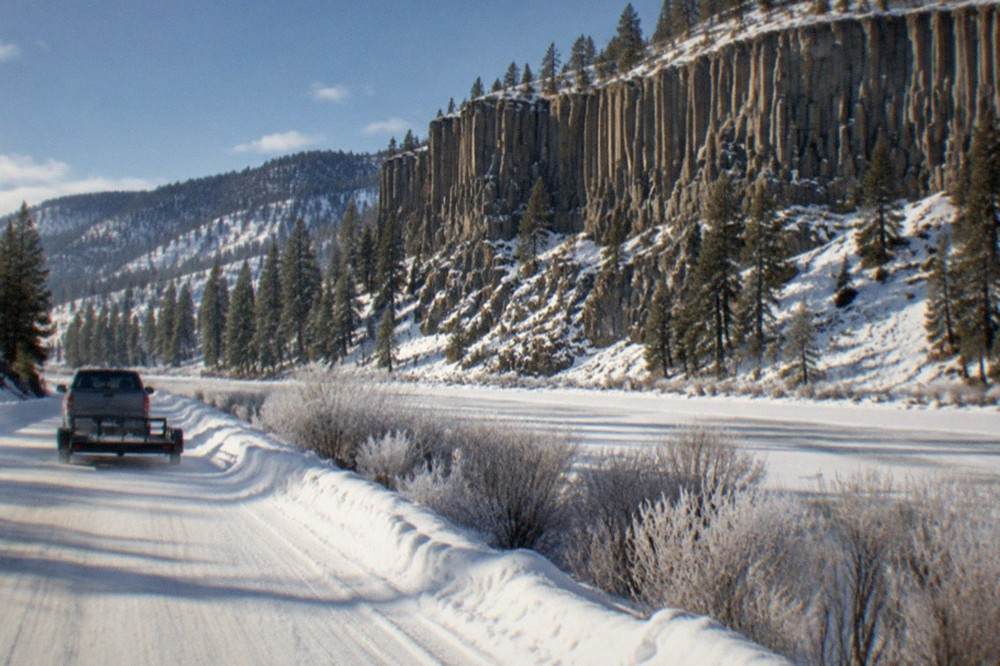
That trade-off is the whole decision, and it surprises people who assume one town is simply "better." Yellowstone in winter is functionally two different parks. The northern strip between Gardiner, Mammoth Hot Springs, Tower, Lamar Valley, and Cooke City stays open to ordinary vehicles every day of the year, per the National Park Service road status page. Everything else, including Old Faithful, the Grand Canyon of the Yellowstone, and the geyser basins, closes to cars in early November and reopens only to oversnow travel once enough snow accumulates, usually by mid-December. If you're still deciding between parks, our Yellowstone versus Grand Teton winter comparison sorts out which one better fits a cold-weather trip.
So the real question is not which town is nicer, though they feel very different. It is which winter version of Yellowstone you came for. A photographer chasing wolves in Lamar Valley wants Gardiner. A traveler whose whole trip is built around watching Old Faithful erupt against a white landscape wants the oversnow side, and that side runs through guided snowmobile tours and heated snowcoach trips. The site behind this article, Yellowstone Snowmobile Tours, exists precisely because that oversnow side is the part visitors cannot reach on their own.
There is a wrinkle worth knowing before you book any lodging, and it is the single most useful thing this comparison can tell you. Guided in-park snowmobile tours, including the Old Faithful and Grand Canyon of the Yellowstone snowmobile tours, are run by Scenic Safaris and depart with hotel pickup in the Jackson Hole area, entering the park through the South Entrance. West Yellowstone is a genuine snowmobiling hub with its own operators and rental shops, but if you book one of these specific guided tours, your departure point is Jackson, roughly two and a quarter hours south of West Yellowstone in winter. Plan your base town around that fact, not around the assumption that every park snowmobile tour leaves from the west gate.
What Each Town Gives You Access To
Gardiner puts you on the year-round North Entrance road, the single winter corridor open to regular vehicles, giving self-drive access to Mammoth Hot Springs, Tower, Lamar Valley, and Cooke City. West Yellowstone sits at the West Entrance, where interior roads are oversnow only in winter, so everything beyond the gate requires a guided snowmobile tour, a snowcoach tour, or skis. The towns are not interchangeable bases.
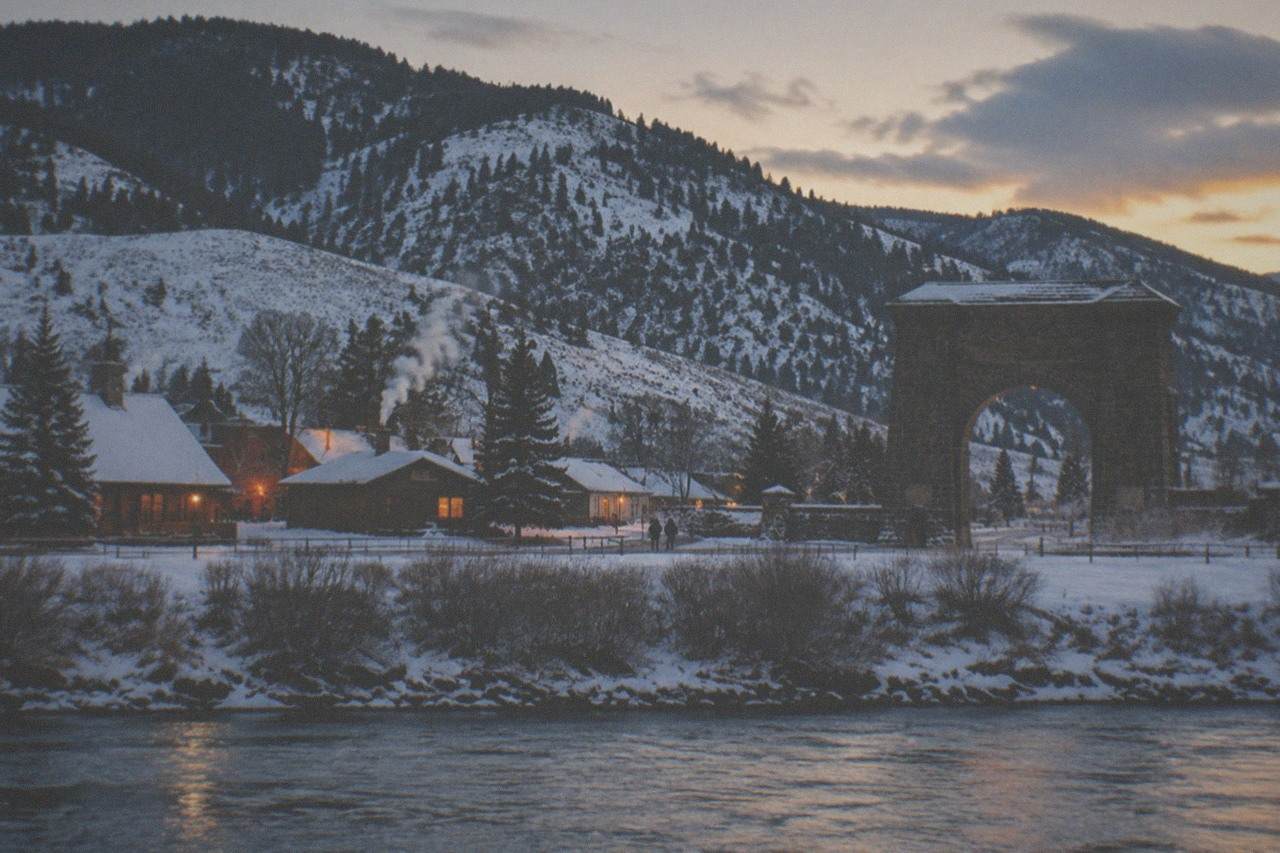
Start with Gardiner, because its winter advantage is structural rather than scenic. The park's own road guidance confirms that the Mammoth-to-Northeast-Entrance corridor stays open to cars through every season. A visitor staying in Gardiner can wake up, drive five minutes through the Roosevelt Arch into the park, and spend the day watching bison and wolf activity across the Northern Range without a tour, a permit, or a guide. Entrance fees still apply, with a seven-day private vehicle pass at $35, but there is no oversnow equipment, no guide requirement, and no lottery.
West Yellowstone works the other way around. The town is widely called the Snowmobile Capital of the World, a title rooted in decades of gateway traffic, a large surrounding trail network in the national forests, and a local economy built on sleds rather than a formal park designation. In winter the West Entrance admits oversnow travel only, on the standard mid-December to mid-March window the National Park Service describes for winter visits. A guest based in West Yellowstone who wants Old Faithful or the Lower Falls books a guided snowmobile tour or a heated snowcoach tour, or rides rental sleds on the forest trails outside the park. The deeper town-by-town trade-off is laid out in Jackson Hole vs West Yellowstone for a Winter Tour, which covers the southern gateway angle this comparison deliberately sets aside.
| Factor | Gardiner (North Entrance) | West Yellowstone (West Entrance) |
|---|---|---|
| Winter access by regular car | Yes, Mammoth to Northeast Entrance road open year-round | No, interior roads are oversnow only mid-December to mid-March |
| Signature winter experience | Self-drive wildlife watching in Lamar Valley | Guided snowmobile and snowcoach tours into the park interior |
| Guided tour requirement | Not needed for the plowed road | Required for park oversnow travel |
| Reach Old Faithful in winter | Only via an oversnow tour from another gateway | Yes, on a guided tour from the West Entrance area |
| Nearest airport | Bozeman Yellowstone International, about 90 minutes south | Bozeman Yellowstone International, roughly 90 miles north |
One more distinction that trips up first-time winter visitors: the entrance itself is not the same as the departure point for your tour. Tours that enter at West Yellowstone leave from operator shops in that town. The Scenic Safaris in-park tours depart from Jackson Hole hotels and enter Yellowstone at the South Entrance. And riders who want snowmobile time without entering Yellowstone at all can ride the groomed forest trails around either town on rentals, no commercial guide required for that national forest land, though a guided snowmobile tour inside the park always requires an authorized commercial or permitted non-commercial guide.
Can You Drive Into Yellowstone From Either Town In Winter?
From Gardiner, yes: the North Entrance road to the Northeast Entrance is the only park road plowed and open to regular vehicles year-round. From West Yellowstone, no: once oversnow rules begin, cars stop at the gate, and the interior beyond it is reachable only by guided snowmobile, snowcoach, or non-motorized travel. Roughly 30 miles of winter Yellowstone are drivable, and the rest is not.
This is where winter trips are won or lost, so it deserves the plainest possible statement. Yellowstone closes most of its roads to automobiles in early November, and the National Park Service road page is explicit that only one corridor, Gardiner through Mammoth Hot Springs, Tower Junction, Lamar Valley, and on to Cooke City, stays open to wheeled vehicles through the winter months. Every other entrance, including West Yellowstone's, converts to oversnow-only travel once snowpack allows, typically from mid-December through mid-March.
The practical consequence for a Gardiner stay is freedom of schedule. You can drive into the park at 8 a.m. or 2 p.m., linger wherever the wildlife is, and detour freely. Daytime winter temperatures in the park run from zero to 20 degrees Fahrenheit, with sub-zero nights common at elevation, so a warm car you control is genuinely valuable for families with kids or photographers working long hours in Lamar Valley.
The consequence for a West Yellowstone stay is that everything beyond the gate is a booked product. That is not a defect, it is the design of winter access in this park: the oversnow system exists to concentrate impact on groomed roads, and a commercially guided snowmobile tour is the primary way the interior opens to visitors. The alternative lottery route, the Non-Commercially Guided Snowmobile Access Program, admits only four small groups per day and ran its 2026-2027 lottery on Recreation.gov from August 1 through August 31, so by the time most travelers are comparing hotel prices it is already closed or nearly so.
Since neither town lets a car reach Old Faithful in winter, the guided tour becomes the product that decides your base. The Old Faithful full-day snowmobile tour from Jackson Hole, rated 4.6 across 338 reviews and priced from $475, is the classic answer: hotel pickup in the Jackson area, snowmobiles on the trail by roughly 8 to 9:30 a.m., and a full day of about 10 to 12 hours door to door.
Where Do Guided Snowmobile Tours Of Yellowstone Actually Depart From?
The in-park guided snowmobile tours on this roster all depart from the Jackson Hole area, with hotel pickup and entry through the South Entrance, not from West Yellowstone. That means a traveler who books one of these guided tours and sleeps in West Yellowstone still faces a drive of more than two hours each way to reach the pickup. For these specific products, Jackson is the base that fits.
This is the fact most comparison articles get wrong, because the "West Yellowstone is the snowmobile capital" framing is true at the town level but incomplete at the booking level. The verified meeting data for all three in-park tours sold here, the Old Faithful snowmobile tour, the Grand Canyon of the Yellowstone snowmobile tour, and the Old Faithful snowcoach tour, shows hotel pickup in the Jackson, Wyoming area with park entry at the South Entrance. Vans collect riders at Jackson hotels between roughly 6 and 7:30 a.m., drive about 60 miles to the entrance, and the group is outfitted with suits, helmets, and machines before riding groomed roads into the interior.
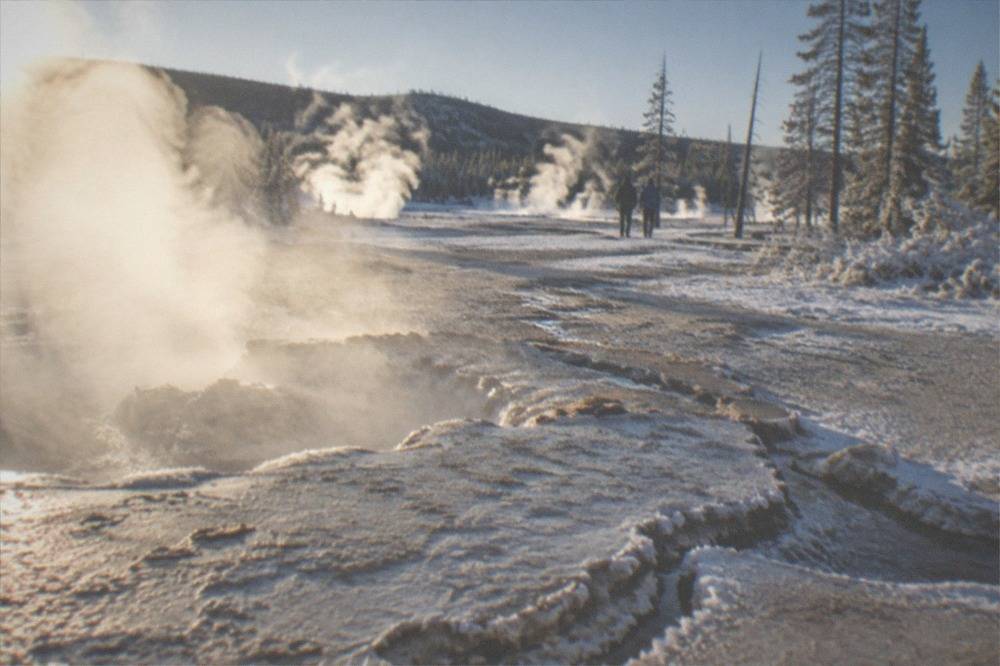
The Old Faithful snowmobile itinerary is a good picture of the day: stops at Moose Falls, Lewis Canyon, and West Thumb Geyser Basin on the way in, time at Upper Geyser Basin to watch an eruption, and return to Jackson hotels by late afternoon. Old Faithful's eruptions run on a median interval of about 102 minutes, which means roughly 17 eruptions a day, so tour timing to catch one is reliable enough to plan around.
For travelers set on West Yellowstone as a base, the honest guidance is to book oversnow products that actually depart there, which means shopping the local operators based in that town, or to split the trip. Ride forest trails or local tours out of West Yellowstone on some days, and add a Jackson-departure in-park guided snowmobile tour on the day you are willing to change hotels or make the drive. Plenty of winter itineraries do exactly that, pairing a night or two in each town.
For readers who simply want a snowmobile experience without entering the park at all, the Jackson Hole side also carries a deep bench of outside-the-park rides, like the Bridger-Teton guided snowmobile tour from Moran, rated 4.7 across 87 reviews from $350. It is not a Yellowstone interior tour, and it should never be sold as one, but for a Jackson-based stay it shortens the day considerably.
Lodging, Crowds, And Winter Atmosphere
West Yellowstone offers a much larger winter lodging machine, with short-term rental data showing roughly 450 active listings at an average daily rate near $484, while Gardiner is a smaller, quieter town whose winter business leans on the drivable North Entrance. Winter visitation is tiny compared with summer, so neither town feels crowded in January or February, but West Yellowstone feels like a functioning winter resort town and Gardiner feels like a village.
The numbers make the scale difference clear. Recent market data for West Yellowstone's short-term rentals shows about 450 active listings running around 61 percent average occupancy, with winter demand tied closely to snowmobiling and skiing alongside the dominant summer peak. Gardiner has no comparable published rental inventory in this research, which itself tells you something: it is a small gateway town, and its winter hotels live on Northern Range wildlife traffic and snowcoach travelers.
Crowds barely register in either place, in the park or in town. NPS visitation statistics put January at roughly 28,837 visits, about 0.72 percent of Yellowstone's annual total, against July peaks above 900,000. A winter traveler in either gateway has the landscape almost to themselves compared with any summer week. What differs is what the few fellow visitors are doing: in Gardiner they are parked at pullouts with spotting scopes, in West Yellowstone they are checking in for guided snowmobile tours in insulated suits.
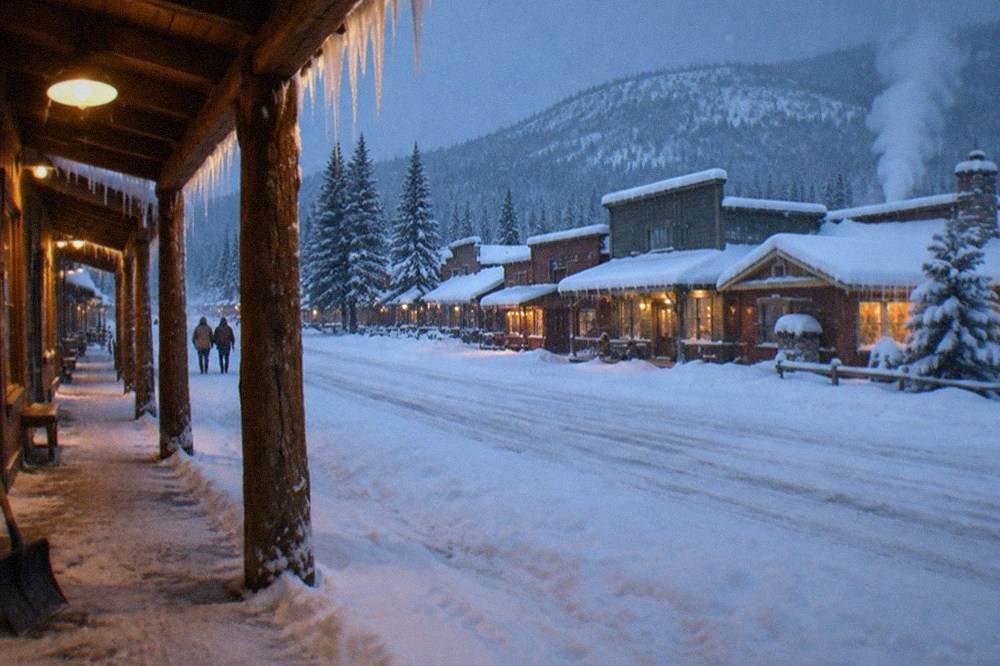
Atmosphere follows function. West Yellowstone in winter runs on sleds: rental shops, warming huts, groomed trails fanning into the Gallatin and surrounding national forest, and families walking main street in snowmobile gear. Gardiner runs on the road: the Yellowstone River open beside the town, elk near the school athletic field, and a slower rhythm geared to wildlife watchers. Neither is wrong, they are just different products, and the town should match the trip you actually booked. Anyone leaning toward the west side can go deeper on the practicalities in where to stay in West Yellowstone for a snowmobile tour.
How Many Days Should You Base In One Town?
Most planning sources suggest a minimum of three full days for a first winter Yellowstone trip, with four to five allowing a relaxed pace or coverage of both regions. Basing in one town for the whole stay forces a choice between the drivable north and the oversnow interior, while a two-town split of roughly two nights in Gardiner plus two or three in the Jackson or West Yellowstone side covers both halves without rushed days.
The length question is really an access question again. Winter days are short, oversnow travel runs between 7 a.m. and 9 p.m., and long van transfers eat daylight. A single night in one gateway barely buys one activity. Three days is the floor for a trip that includes a full-day guided snowmobile tour plus a wildlife day, because those are two full days, and the third absorbs weather. The full length question is covered in how many days you need for a Yellowstone winter trip.
Travelers who want the whole interior in one booking sometimes skip the town-hopping entirely with a multi-day package. The four-day Grand Teton and Yellowstone winter tour from Jackson, priced from $2,089, covers both parks across four days with the logistics handled, and it carries a 5.0 rating across nine reviews, a perfect score drawn from a small pool. For that product, the base-town question largely disappears: the tour moves you.
Weather buffer matters more in winter than in any other season. The East Entrance road over Sylvan Pass can close for hours or days on avalanche danger, and the National Park Service warns that mild winters have caused late openings and early closures of oversnow segments in recent years. Building a spare day into a three-or-four-day stay is not padding, it is insurance against losing your one guided tour day to a storm. If you're weighing the Cody side of the map, our guide to snowmobiling into Yellowstone from Cody via Sylvan Pass explains how that route handles avalanche closures differently.
For the split-itinerary reader, the geography cooperates better than you might expect. Gardiner to Bozeman's airport is about 90 minutes south, and Bozeman to West Yellowstone is roughly 90 miles more, so a Gardiner-then-West-Yellowstone loop via Bozeman works as a one-way road trip with a rental car. A Gardiner-plus-Jackson split is longer but pairs the Northern Range with the South Entrance oversnow routes that this site's in-park tours actually use.
Which Town Wins For Your Kind Of Winter Trip?
Choose Gardiner if your priority is independent wildlife watching on the year-round north road, lower tour dependence, and a quieter small town. Choose West Yellowstone if your priority is being immersed in the snowmobile economy, with forest trail riding and oversnow options at the doorstep. Choose Jackson Hole instead of both if you have booked one of the Scenic Safaris in-park guided tours, because those depart from there, not from either northern gateway.
That third option deserves emphasis because it is the decision this article most often changes. A traveler who reads "West Yellowstone is the snowmobile capital," books a hotel there, and then reserves the Old Faithful snowmobile tour from this site has accidentally signed up for a two-and-a-quarter-hour drive to a 6 a.m. hotel pickup in Jackson. The cleaner plan is to sleep in Jackson or Teton Village for the tour days, then move north for wildlife days in Gardiner if the trip is long enough.
For pure snowmobile-focused travelers, West Yellowstone remains the stronger base in the wider market: its rental and tour ecosystem is the largest in the region, and self-guided forest rentals there run roughly $230 to $300 per day. But keep the boundary straight: rented sleds on national forest trails do not enter Yellowstone. Interior access always means a commercial guide, a snowcoach tour, or one of the scarce non-commercial permits, and that rule has held unchanged through the current season.
Common Questions About Gardiner Or West Yellowstone
Is It Better to Stay in Gardiner or West Yellowstone for a Winter Trip?
Gardiner is better if you want to drive into the park yourself and watch wildlife in Lamar Valley, since the North Entrance road stays open to cars year-round. West Yellowstone is better if your trip centers on snowmobile culture and oversnow touring. If you booked a Scenic Safaris in-park guided tour from this site, base yourself in Jackson Hole instead, because those tours pick up there.
Can You Drive Into Yellowstone From Gardiner in Winter?
Yes. The road from the North Entrance at Gardiner through Mammoth Hot Springs, Tower Junction, and Lamar Valley to the Northeast Entrance and Cooke City is the only park road plowed and open to regular vehicles year-round. A $35 seven-day vehicle pass covers the car and everyone in it.
Can You Drive Into Yellowstone From West Yellowstone in Winter?
No. Once oversnow rules take effect, typically mid-December through mid-March, regular vehicles cannot pass the West Entrance. Interior travel from that side requires a guided snowmobile tour, a snowcoach tour, skis, or snowshoes. Rental sleds from West Yellowstone shops ride the surrounding national forest trails, not the park roads.
Where Do Guided Snowmobile Tours of Yellowstone Depart From?
The in-park Scenic Safaris trips, the Old Faithful and Grand Canyon of the Yellowstone snowmobile tours and the Old Faithful snowcoach tour, all run with hotel pickup in the Jackson Hole area and enter through the South Entrance. Other operators are based in West Yellowstone. Check your specific tour's meeting point before booking lodging.
Is West Yellowstone or Gardiner Closer to Old Faithful in Winter?
Neither town can drive you there in winter. From West Yellowstone, Old Faithful is reached on a guided oversnow tour of roughly 30 miles each way on groomed roads. From Gardiner it is a much longer oversnow journey. In practical terms, the fastest winter route to Old Faithful is a guided snowmobile or snowcoach tour, and the Scenic Safaris Old Faithful tour from Jackson Hole does it in about 10 to 12 hours door to door.
Which Town Is Cheaper for a Winter Stay?
There is no verified head-to-head lodging price for the two towns in this research, so no honest number can be printed here. West Yellowstone's short-term rental market averages near $484 per night across roughly 450 listings, and Gardiner is a smaller market with fewer published figures. Compare actual dates and properties before assuming either town is cheaper.