West Yellowstone Snowmobile Rentals And What You Can Actually Ride
Renting a snowmobile in West Yellowstone is easy. Riding one into Yellowstone National Park is not, because most of the park requires a licensed guide. Here is what a rental actually gets you, what it costs, and when booking a guided tour is the smarter move.
Short answer
Yes, you can rent snowmobiles in West Yellowstone from roughly $230 to $300 per day, but rented sleds cannot legally enter Yellowstone's interior on your own. Winter travel inside the park requires a commercial guide or a hard-to-get lottery permit, so most renters ride national forest trails outside the park instead.
Can You Rent A Snowmobile In West Yellowstone And Ride Into The Park?
Yes, West Yellowstone has a full rental market with dozens of shops, daily rates typically between $230 and $300 per machine, and hundreds of miles of groomed national forest trails right outside town. No, a rented sled cannot simply ride into Yellowstone National Park: interior roads are restricted to commercially guided tours and a small lottery-permit program, so renters ride outside the park boundaries.
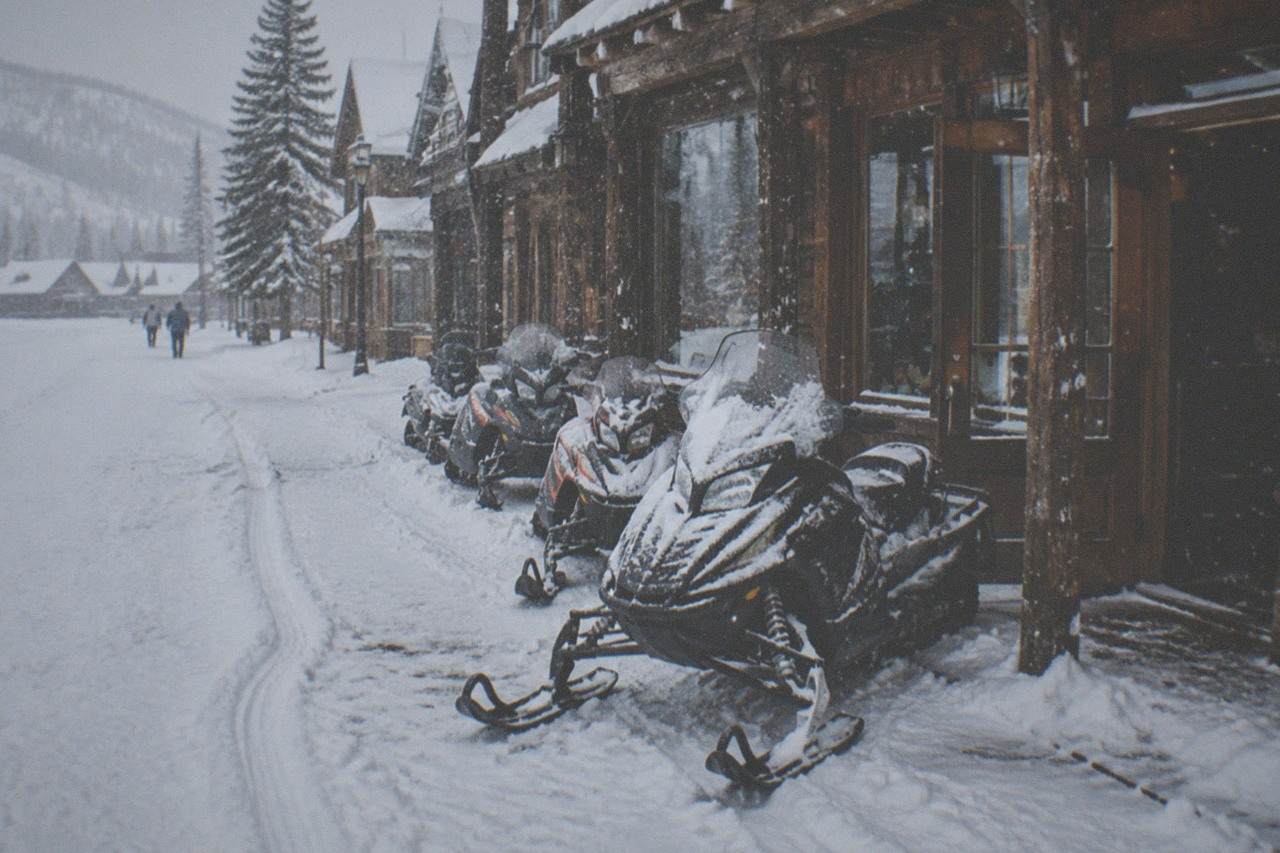
The town of West Yellowstone, Montana sits a few blocks from the park's West Entrance and bills itself as the snowmobile capital of the world, a title rooted in real numbers rather than marketing alone. Peak seasons historically saw roughly 55,000 snowmobile entries through the West gate, and the surrounding Gallatin National Forest carries an extensive groomed trail system that rental customers can ride freely. The rental economy here is genuinely large: shops line the main street, hotels advertise Bed and Sled packages, and winter visitor spending is a core part of the town's economy.
What trips up many first-time visitors is the legal line between the town's trail network and the park itself. Since a 2013 National Park Service winter use rule, every snowmobile entering Yellowstone must travel with a guide, either a commercial guide on an authorized tour or a permit holder under the Non-Commercially Guided Snowmobile Access Program. Unguided snowmobile access inside the park is prohibited, full stop. The rule is written into federal regulation (36 CFR 7.13) and enforced at every oversnow entrance.
That means the honest answer to the rental question has two halves. A rental in West Yellowstone buys you a machine, a helmet and a day of excellent riding on forest trails, the Two Top area, and groomed routes outside the park. It does not buy you a ride to Old Faithful, the Grand Canyon of the Yellowstone, or any interior geyser basin. For those, you need a Yellowstone Snowmobile Tours style guided product or a lottery permit, and the lottery is genuinely competitive.
The distinction matters for how you plan the whole trip, and it is worth understanding before you put a deposit down on anything.
What Does A Snowmobile Rental In West Yellowstone Actually Cost?
Daily rental rates in West Yellowstone run from about $230 for a standard touring double to $300 or more for performance and mountain sleds, based on operator listings from Highmark Rentals, Yellowstone Vacation Tours and other local shops. Guided full-day tours inside the park start at $475 per person with local outfitters, so a rental is cheaper per day but rides different terrain.
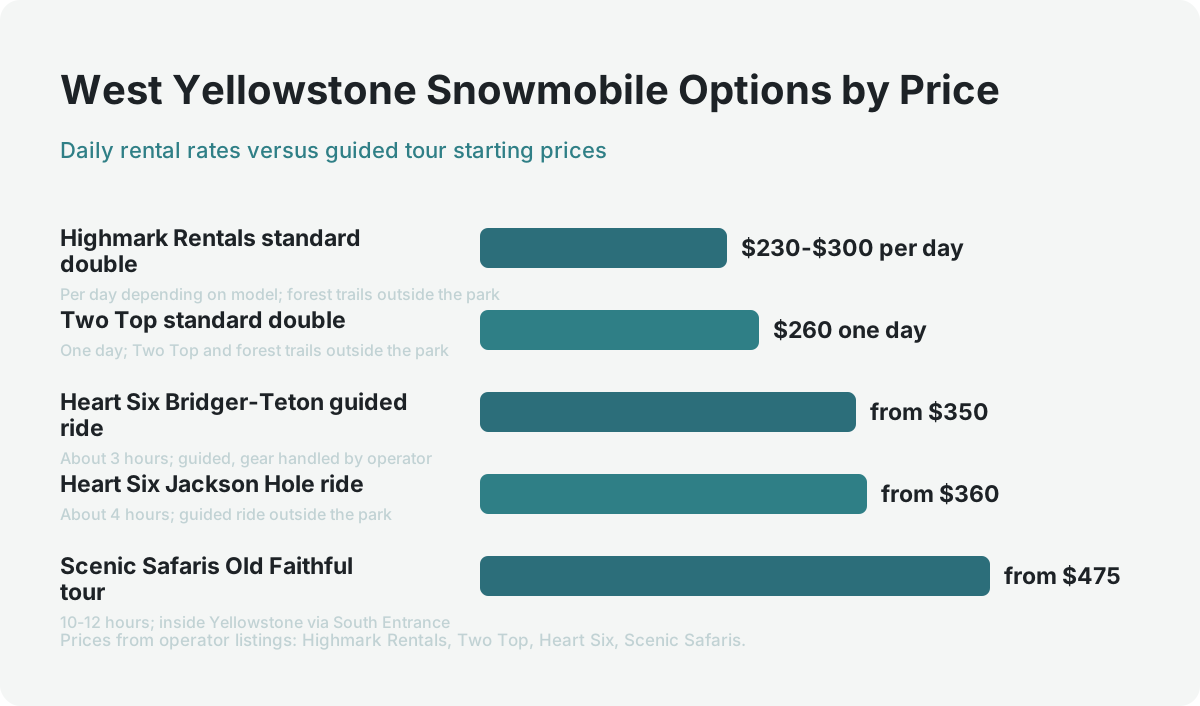
The rental shops are straightforward about pricing. Highmark Rentals lists models from $230 to $300 per day, with touring doubles such as the Ski-Doo Grand Touring at the lower end and higher-spec mountain machines above them. Yellowstone Vacation Tours, operating through its Two Top rental arm, lists a one-day standard double at $260. Other West Yellowstone operators, including Polaris Adventures affiliates and See Yellowstone, advertise starting rates in the mid $230s to $250s for singles and doubles.
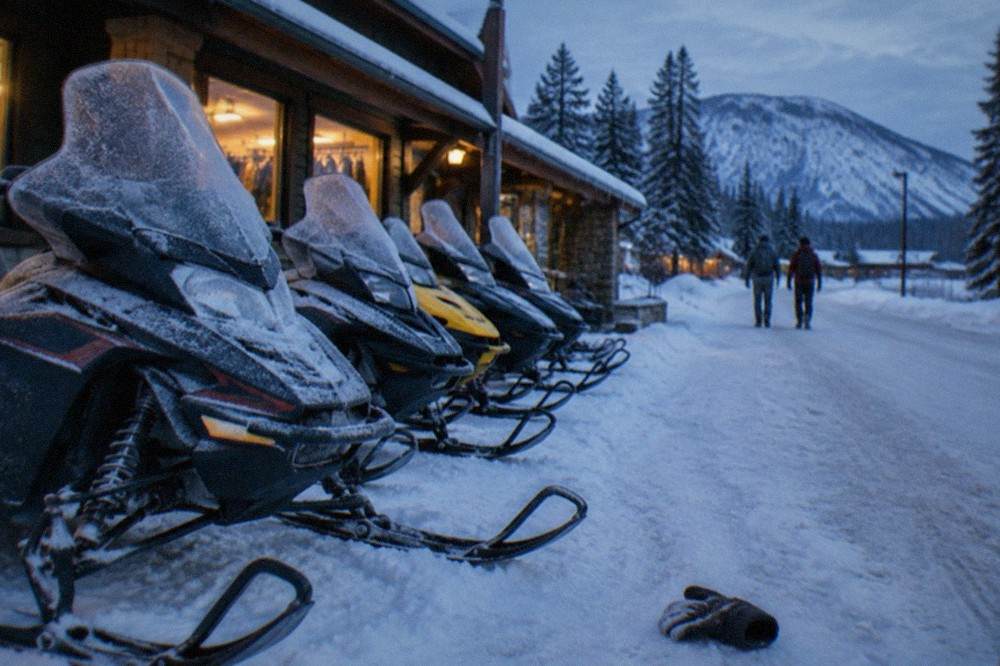
What the sticker rate includes varies, and this is where budgets quietly stretch. Helmets are usually included with the machine. Insulated suits, boots and gloves are often an extra line item unless bundled, so ask what the outerwear adds before comparing two shops that look identical on price. Taxes, damage waivers and fuel are typically separate too. A safe planning habit is to add a rough cushion on top of the daily rate for gear and waivers, then confirm the exact total when you reserve, since shops bundle differently.
Park entrance is not part of a forest rental because you are not entering the park. If you do book a commercial tour into the interior, the entrance fee structure applies: the standard 7-day pass runs $20 to $35 depending on vehicle type, a snowmobile pass is $30 per sled, and non-US residents aged 16 and up pay an additional $100 per person unless they hold a qualifying pass. Children under 16 are free. Those fees come from the NPS fees page, not from tour operators, and they sit on top of any tour price.
Here is how the real published numbers stack up, using only figures from actual listings and this site's verified tour roster:
| Option | Published price | What it covers | Where you ride |
|---|---|---|---|
| Highmark Rentals standard double | $230-$300 per day depending on model | Machine and helmet; clothing usually extra | National forest trails outside the park |
| Two Top / Yellowstone Vacation Tours standard double | $260 one day | Machine and helmet | Two Top and forest trails outside the park |
| Bridger-Teton guided snowmobile tour (Heart Six) | from $350, about 3 hours | Guided ride, gear handled by operator | Jackson Hole / Bridger-Teton, outside the park |
| Heart Six Snowmobiling in Jackson Hole | from $360, about 4 hours | Guided ride outside the park | Buffalo Valley, Moran, WY |
| Old Faithful full-day snowmobile tour (Scenic Safaris) | from $475, 10-12 hours | Commercial guide, machine, gear; rated 4.6 across 338 reviews | Inside Yellowstone, South Entrance route |
The price gap between a rental and an in-park guided tour is real, and the experiences are genuinely different products. A rental day is your own pace, your own route, your own mistakes to manage. A guided tour buys a legal entry permit, a guide who knows where the wildlife is, gear handled, and a planned itinerary to the park's headline sights. Neither is the wrong choice; they answer different questions.
The table above is why the tour-vs-rental decision is worth making before you book lodging. If your heart is set on Old Faithful in winter, no rental in West Yellowstone gets you there, and no amount of asking at the counter will change the federal rule. If your goal is miles of trail and mountain scenery with no geyser basin on the itinerary, a rental plus a forest map is a great day.
Where Can You Ride A Rented Snowmobile Near West Yellowstone?
Rented sleds from West Yellowstone ride the Gallatin National Forest trail system: the Two Top and Lionhead area, the Big Sky and Taylor Fork corridors, and hundreds of miles of groomed routes that never cross into the national park. Every rental shop in town hands out maps and route advice for these trails, and most groom daily in season.
Two Top, the high ridge plateau west of town, is the classic first ride and the namesake of one of the oldest rental outfits in the area. The terrain is friendly to beginners, the grooming is consistent, and the views across the Madison Range are a genuine payoff. Lionhead extends the same general area toward the Idaho line with more elevation and longer loops. Riders comfortable with a full day can head toward Big Sky, riding the canyon trail along the Gallatin River on a route that connects West Yellowstone to the ski town through some of the prettiest valley scenery in the region.
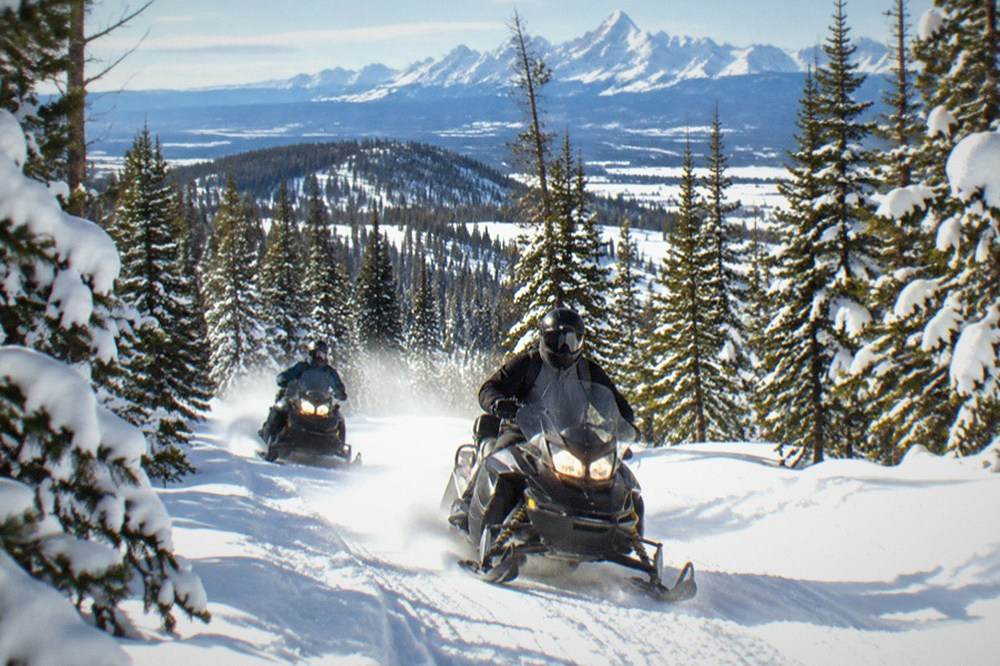
What you will not find on any of these trails is a geyser. That is the trade, and it is a fair one for many riders. The forest riding around West Yellowstone is arguably better snowmobiling than the park's flat, speed-limited groomed roads: steeper pitches, deeper snow, play areas and boondocking, and none of the strict rules that keep park travel on a leash. Inside Yellowstone, snowmobiles stay on groomed roads, follow the guide, and stop where the guide stops. Outside it, within forest service rules, you can actually ride your machine the way it was built to be ridden.
The main riding areas break down like this:
| Riding area | Terrain character | Best for | Watch out for |
|---|---|---|---|
| Two Top | Open plateau, gentle grades, consistent grooming | First-timers and families | Busy on weekends near town |
| Lionhead | Higher elevation, longer loops, deeper snow | Intermediate riders wanting mileage | Weather can close in fast up high |
| Gallatin Canyon toward Big Sky | Valley trail along the river, scenic corridor | Full-day point-to-point riders | Longer commitment, fuel planning |
| Taylor Fork | Mountain terrain, play areas, boondocking | Experienced riders | Avalanche terrain, check forecasts |
| Madison Range loops | Varied terrain, big views | Mixed groups | Remote stretches, no services |
The safety picture is different out here too. The NPS winter safety guidance notes that avalanches occur throughout the Yellowstone area and can be deadly, and recommends checking the Gallatin National Forest Avalanche Center forecast before any backcountry-adjacent riding. Riders on forest trails should carry the same basics the park recommends for permit holders: a shovel, a first aid kit, extra layers, and a means of communication that does not depend on cell coverage, which is unreliable across this whole region in winter and dies fast in the cold.
If a self-guided rental day sounds like it has too many moving parts, there is a middle option: guided rides outside the park, which remove the navigation and safety burden while staying off park territory. The Heart Six operation out of Moran, Wyoming runs a roughly three-hour guided Bridger-Teton ride from $350 that has earned a 4.7 rating across 87 reviews, and their longer four-hour Jackson Hole trip from $360 sits at 4.8 across 50 reviews. Neither enters Yellowstone, but both deliver mountain riding with a guide handling the route.
For a fuller picture of what guided riding outside the park looks like, the guide to Jackson Hole Yellowstone snowmobile tour options breaks down the Moran-area operators and how they differ. And if you are weighing whether the forest trails around town will hold up on your dates, the West Yellowstone snowmobile trail conditions page explains how grooming and snowpack shape the experience week to week.
Guided Tour Vs Rental: Which One Fits Your Trip?
Choose a rental if your goal is trail riding at your own pace on national forest terrain and you do not need to see Old Faithful or the interior; choose a guided tour if Yellowstone's geyser basins, the Grand Canyon of the Yellowstone or wildlife corridors are the point of the trip. Rentals win on cost per day, roughly $230-$300, while tours win on access, since the law blocks unguided park entry entirely.
This is the decision that actually determines your itinerary, and it deserves more care than most travelers give it. Start with the honest question: what is the trip for? If the answer is riding, covering ground, playing in powder and feeling the machine, the rental path serves you well and saves real money. If the answer is Yellowstone itself, the geysers, the canyon, the wildlife in snow, then the rental path leads to a frustrating day of good riding with the wrong scenery. Everything else covered here is indexed on Yellowstone Snowmobile Tours.
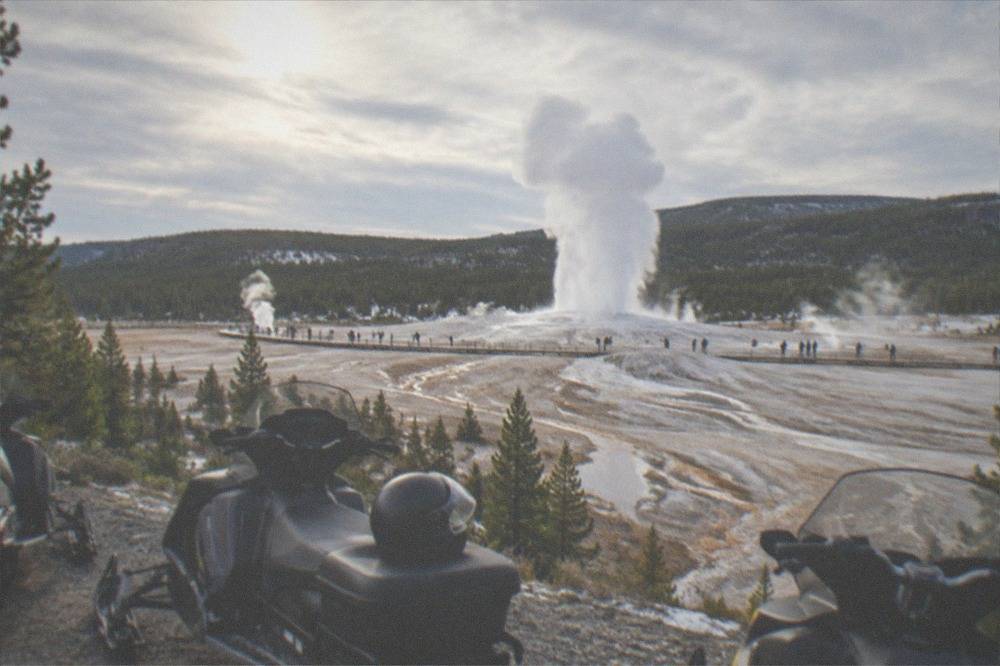
The deeper guide to this exact trade-off, with the rule-by-rule breakdown, is the guided vs self-guided Yellowstone snowmobile tour comparison. The short version of the legal reality: the commercial tours sold here run under concessioner permits with equipment that is NPS-compliant by definition, while the lottery program for non-commercial groups admits only four groups per day, one per oversnow entrance, with permits capped at three days and five snowmobiles per group. Winning that lottery is not a plan, it is a lottery.
There is also a middle path many visitors miss: split the trip. Rent for a day of forest riding around West Yellowstone, then book one guided in-park day for the interior sights. The guided day is the expensive one, from $475 per person for the Scenic Safaris Old Faithful snowmobile tour, roughly 10 to 12 hours door to door with hotel pickup in the Jackson area and entry through the South Entrance. That tour carries a 4.6 rating across 338 reviews, a pool large enough to mean something, and it handles the machine, the gear, the permit and the routing in one price.
The Scenic Safaris Grand Canyon of the Yellowstone snowmobile tour, a roughly 12-hour day also from the Jackson area, is the other interior route: it targets the canyon, the Lower Falls ice formations and Lookout Point viewpoints rather than the geyser basins. Its review pool sits at 13 (4.4 stars), so treat it as a route-first choice rather than a crowd-validated one. Its sibling snowcoach to Old Faithful, a heated-tracked-van alternative from $450 rated 4.8 across 227 reviews, suits travelers who want the interior without riding a machine at all, and the Yellowstone snowcoach tours guide covers that lane in full.
Whichever way you lean, book the in-park day early. Winter visitation in Yellowstone is dramatically lower than summer, with January historically drawing under one percent of annual visits, but the guided-tour seats are a fixed and small supply, and holiday weeks fill the limited roster fast.
What Do You Need To Bring And Know For A Rental Day?
Renters need a valid driver's license to operate, their own base and mid layers of wool or synthetic clothing (no cotton), and personal items like goggles, a neck gaiter and sunscreen; shops supply the machine, helmet and usually insulated outerwear. Winter daytime temperatures in the area run 0°F to 20°F, with sub-zero nights, and wind chill on a moving sled makes the felt cold far worse. If you want a fuller picture of what those conditions do to your body on the trails, our deep dive into winter temperatures inside the park explains what the cold actually feels like from the seat of a sled.
The gear logic is the same whether you rent or ride a guided tour. The NCSA-style packing guidance that the NPS publishes for permit holders applies equally to forest riders: moisture-wicking base layer, insulating mid layers, insulated gloves and boots, wool or synthetic socks, and a balaclava or neck gaiter. Cotton is the one fabric to leave at home, because it holds sweat and turns cold. Rental shops supply or rent the outer shell, helmet, boots and mittens; riders bring everything that touches skin.
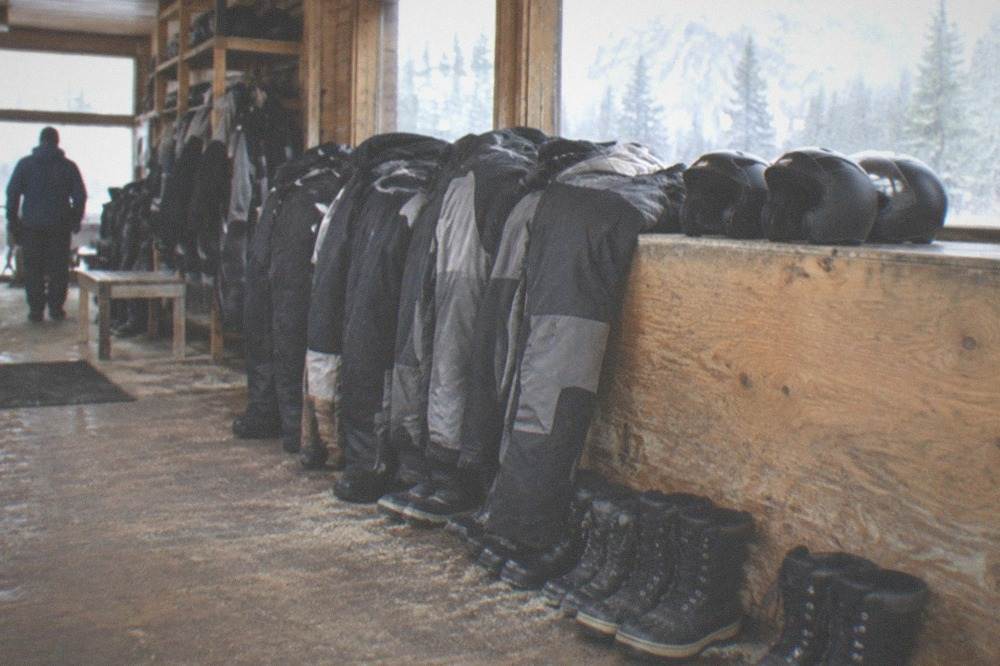
Cold management on a sled deserves respect. Moving at trail speed in single-digit air multiplies wind chill dramatically, and phone batteries drain fast in those temperatures, which matters because cell coverage across the region is unreliable. Carry chemical heat packs, keep spare batteries inside a warm pocket, and plan check-ins that do not depend on a signal. The full layering and packing breakdown lives in the what to wear snowmobiling in Yellowstone guide, and a printable version covers the same list for rental riders.
Operator age and license rules sit close to the NPS baseline. On commercial tours, operators must be at least 16 with a valid state-issued driver's license, and passengers, commonly from age 8 on approved two-up machines, must be able to reach the handgrips and footrests safely. Rental shops apply comparable policies on their own fleets for forest riding, and the details on two-per-sled riding and alcohol rules, including the 0.04 BAC limit for group leaders and the open-container ban, are laid out in the Yellowstone snowmobile rules and requirements guide.
One practical note on alcohol: it is prohibited to drink and drive on snowmobiles, snowmobiles are treated as motor vehicles for enforcement purposes, and a rental day that ends with a shop damage claim is expensive enough without a citation. Save it for the lodge.
How Do You Choose A West Yellowstone Rental Shop?
Pick a shop based on machine quality and age, whether outerwear is bundled into the rate, its proximity to your lodging and the trails, and the clarity of its damage-waiver terms, not just the sticker price. The town's rental market is competitive enough that the differences between shops show up in the details rather than the headline daily rate.
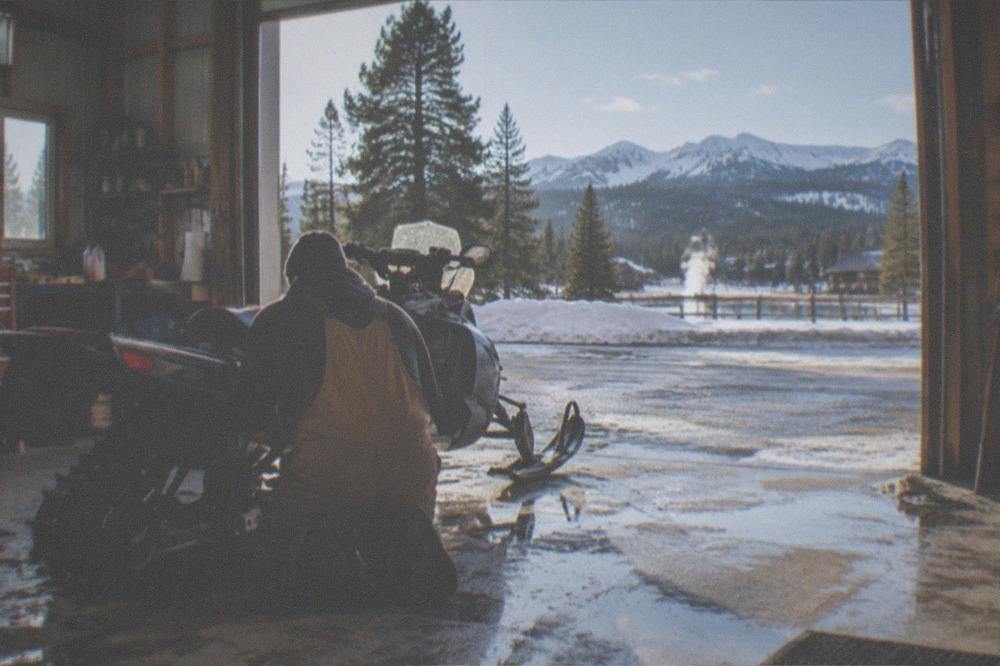
Start with the machine. A newer fleet means fewer breakdowns and better handling, and shops that publish their models, such as Highmark listing specific Ski-Doo touring and mountain sleds, give you something concrete to compare. Ask how old the sled is that you are actually reserving. A $230 day on a worn machine is a worse buy than a $260 day on a fresh one.
Then read the fine print on three things. First, the damage waiver: what it costs, what it covers, and what your card deposit holds if you decline it. Second, the gear bundle: some shops include suit, boots and mittens, others charge per item, and the difference on a family of four can exceed the gap between two shops' base rates. Third, the cancellation policy: winter weather and road closures can end a trip through no fault of yours, and shops differ on whether they rebook, credit or keep the deposit. Ask before you pay, not after.
Logistics shape the day more than newcomers expect. A shop on the north edge of town near the trailheads saves you hauling a machine; a shop that will deliver to your hotel trades a few dollars for real convenience. If your trip flows through Bozeman, the drive down US-191 through the Gallatin Canyon takes roughly two hours in good conditions and longer in snow, and the Bozeman to West Yellowstone winter drive guide covers the route, the road-status resources and the timing honestly. Once you know what the drive involves, the winter route from Bozeman to West Yellowstone becomes far easier to plan around.
A comparison pass before you commit:
| What to compare | Why it matters | What good looks like |
|---|---|---|
| Fleet age and models | Reliability and handling on the trail | Named recent models, not "a sled" |
| Outerwear terms | Suits, boots and mittens can add heavily per rider | Bundled or clearly priced per item |
| Damage waiver and deposit | Defines your worst-case cost | Written, capped, explained before payment |
| Cancellation policy | Weather can cancel trips outright | Rebooking or credit offered for closures |
| Location and delivery | Machine pickup costs time and effort | Near trailheads, or delivers to lodging |
| Trail advice and maps | Local knowledge prevents wasted hours | Groomed-route maps and honest current conditions |
If all of that administration sounds like work, that is precisely the pitch of the guided alternative: someone else owns the machine, the waiver, the route and the weather call. The short Bridger-Teton guided ride from Heart Six, from $350 for about three hours and rated 4.7 across 87 reviews, is a low-commitment way to test whether you even like the activity before renting for a full self-guided day.
How Should You Plan The Whole West Yellowstone Trip?
Anchor the trip on lodging near the West Entrance, book any in-park guided day first because those seats are the scarce resource, schedule rental days around them, and build weather buffers into every driving leg. A first winter visit to the region deserves at least three full days, with four or five allowing a relaxed mix of riding and park sightseeing.
Order of operations is the part travelers get wrong. The scarce resources in a West Yellowstone winter trip are in-park tour seats and weekend lodging, not sleds. Reserve the guided park day first, then the hotel, then the rental, then everything else. Rental fleets in a town built on snowmobiling are large enough that same-week availability is often workable, while a specific tour date in holiday week can sell out weeks ahead.
The lodging market reflects the town's winter role: short-term rental data shows roughly 450 active listings with high winter demand and average daily rates around $484, and hotels advertise Bed and Sled packages that discount rooms when you book sleds through partner shops. The where to stay in West Yellowstone for a snowmobile tour guide compares the neighborhoods and the packages, and it is worth reading before you commit to a room far from the trailheads.
Layer in the non-riding days honestly. If the trip spans more than two days, the area's free and cheap winter offerings fill gaps nicely: the visitor information center with its NPS desk, the free sledding hill and ice rink at Pioneer Park, and community programs through the local Kids N Snow schedule. The region's winter wildlife, bison and elk near the roads, wolves and swans in the valleys, is itself a reason to slow down. The winter wildlife guide covers what you might realistically see and where.
For riders who want more than one day of mountain terrain, the Turpin Meadow area near Moran offers a longer-haul alternative from the same Jackson Hole operator cluster: a Turpin Meadow snowmobile tour rated 4.9 across 26 reviews, from $300, running roughly five and a half to nine hours depending on the option. It is a bigger commitment than a West Yellowstone rental day, and it stays outside the park, but the terrain and the snowpack around Turpin are a genuine step up in mountain character.
However you assemble the days, keep one weather buffer in the plan. The projected oversnow season runs from mid-December through mid-March, with West, South and East entrance roads projected open December 15, 2026 to March 15, 2027 and some interior segments closing as early as March 7. Storms close roads, avalanche control can shut the East Entrance corridor for hours or days, and no operator refunds for weather. A plan with one flex day survives all of that; a plan without one does not.
The rental-versus-tour decision, restated one last time in plain terms: rent for the riding, book the guide for the park. Doing both, one rental day and one guided interior day, is the itinerary most first-time winter visitors end up wishing they had built.
Common Questions About West Yellowstone Snowmobile Rentals
Can you rent a snowmobile in West Yellowstone and ride it into Yellowstone National Park?
No. Unguided snowmobile access inside Yellowstone is prohibited under the 2013 winter use rule, and rented sleds from West Yellowstone ride the surrounding Gallatin National Forest trails instead. Entering the park interior requires a commercially guided tour or a permit from the non-commercial lottery program.
How much does a snowmobile rental in West Yellowstone cost?
Roughly $230 to $300 per day depending on the machine, based on operator listings from Highmark Rentals and Yellowstone Vacation Tours. Helmets are usually included; insulated suits, boots, damage waivers and taxes are often extra, so confirm the total when reserving.
What trails can you ride on a West Yellowstone rental?
The Gallatin National Forest system: the Two Top and Lionhead areas west of town, the canyon trail toward Big Sky, and surrounding groomed loops. None of these enter the national park. Shops provide maps and current grooming advice.
Is a rental or a guided tour cheaper?
The rental is cheaper per day, but it does not reach the park interior. A guided full-day Old Faithful snowmobile tour starts at $475 per person, versus roughly $230 to $300 for a rental day on forest trails. They buy different experiences, not different prices for the same one.
Do you need a driver's license to rent a snowmobile in West Yellowstone?
Yes, operators need a valid state-issued driver's license, matching the NPS baseline that applies to snowmobile operators park-wide. Rental shops apply comparable rules to their own fleets for forest riding, and passengers typically ride as passengers rather than operators.
What should you wear for a rental day?
A moisture-wicking base layer, insulating wool or synthetic mid layers, wool socks, and your own goggles and neck gaiter. Avoid cotton entirely. The shop supplies or rents the insulated suit, helmet, boots and mittens; you supply everything that touches skin.