Yellowstone In Winter: Weather, Roads, And What To Expect
Winter closes most of Yellowstone to cars and rebuilds the park around snow. Here is what the weather, the roads, and the season actually look like, and what that means for anyone planning a guided snowmobile tour.
Short answer
Winter in Yellowstone runs roughly mid-December through mid-March, with daytime temperatures of 0°F to 20°F, sub-zero nights, and interior roads closed to cars and open only to guided snowmobile and snowcoach travel. A typical January sees about 28,837 visits, roughly 0.72 percent of annual totals, versus far heavier summer crowds.
Winter does not merely arrive in Yellowstone, it takes the park over and runs it differently for three and a half months. Between early November and late April most interior roads are closed to regular automobiles, per the National Park Service road status page, and the only wheeled route left is the North Entrance to Northeast Entrance road through Mammoth, Tower Junction, and Lamar Valley. Everything else becomes oversnow country, reachable by guided snowmobile tour, heated snowcoach, or a scarce lottery permit. A guided snowmobile tour is therefore not a luxury add-on in this season, it is the primary door into the park's interior.
That single fact drives everything on this page. The weather matters because it determines what you wear, when tours run, and what you will see. The snowpack matters because it decides the opening and closing dates of the oversnow season itself. This guide walks through the numbers, the closures, the cold, and the wildlife, all framed around what a winter visitor booking a guided tour actually needs to plan for.
What Does Winter Actually Look Like In Yellowstone?
Winter in Yellowstone means deep snow across the interior, dramatically thin crowds, and a park rebuilt around oversnow travel rather than automobiles. Typical January visitation sits near 28,837 recreation visits, roughly 0.72 percent of annual totals, a tiny fraction of what the busy summer months bring. Roads, lodging, and services all contract to a smaller winter footprint.
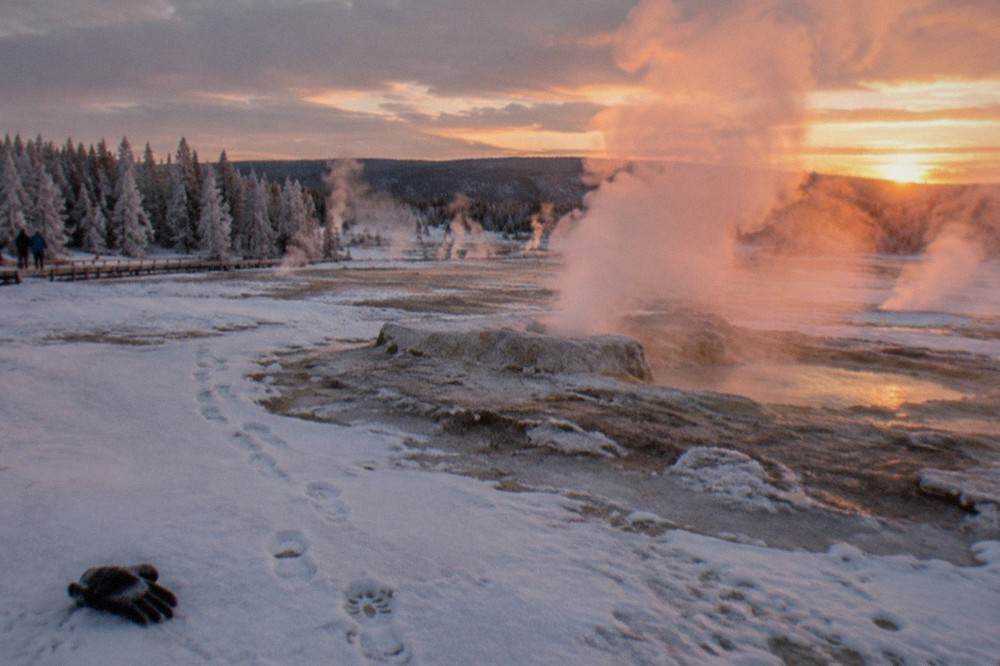
The visual transformation is real, not a marketing flourish. Geothermal steam that would dissipate invisibly in summer hangs heavy over the geyser basins in cold air, and bison congregate around thermal areas where the ground stays clear of snow. Boardwalks around Old Faithful and the Upper Geyser Basin sit inside a white landscape that most summer visitors never see. NPS winter guidance describes snow-covered landscapes, quiet thermal areas, and wildlife in snow as the core draws of the season, and that matches what tour itineraries are built around.
The park's own quick facts explain the scale of the place being transformed. Yellowstone spans 3,472 square miles, sits atop one of the world's largest volcanic calderas at roughly 45 by 30 miles, and holds more than 10,000 hydrothermal features, over 500 of them active geysers, more than half the world's total. In winter, the interior portion of that expanse is accessible only by oversnow transport.
The visitation numbers deserve a moment of attention because they shape the experience more than almost anything else. The NPS historical averages put January at roughly 0.72 percent of annual visitation and February at about 0.82 percent, meaning the park's winter months together account for less than a rounding error of its annual traffic. What that translates to on the ground is short lines at entrance stations, empty boardwalks at thermal features, and the strange sensation of standing at Old Faithful with a handful of people rather than a crowd of shoulder-to-shoulder spectators. It also means the people you do meet, guides, lodge staff, and fellow tour guests, are the ones who deliberately chose this season.
What changes, concretely, is summarized below.
| Aspect | Summer season | Winter season |
|---|---|---|
| Interior roads | Open to private cars mid-April through Oct. 31 | Closed to cars; oversnow travel only, mid-December to mid-March |
| Main access | Self-driving | Guided snowmobile or snowcoach tours, or a lottery permit |
| In-park lodging | Multiple lodges | Two lodges, including Old Faithful Snow Lodge |
| Typical visitation | The bulk of annual visits | About 28,837 in a typical January, 0.72% of annual |
| Services | Full visitor centers and dining | Reduced hours; warming huts at key locations |
For a fuller run-down of what else the season offers beyond riding, see the guide to winter activities besides snowmobiling. The short version is that skiing, snowshoeing, snowcoach touring, and the year-round Lamar Valley road give a winter visitor several ways to spend a day even without a sled.
How Cold Does Yellowstone Get In Winter?
Winter daytime temperatures in Yellowstone typically run 0°F to 20°F, with sub-zero readings common at night and at higher elevations. Average winter highs sit around 20 to 30°F and average lows around 0 to 9°F, and the record low is -66°F, set at Riverside Ranger Station on February 9, 1933.
Those figures come from the National Park Service winter ecology and winter safety pages, and the honest reading is that the range is wide. A calm sunny afternoon in the Firehole basin can feel almost pleasant at 25°F, while the same day at 8 a.m. near the South Entrance can be well below zero before you factor in the wind of a moving sled. NPS winter safety guidance emphasizes windproof outer layers over wool or synthetic insulation, no cotton, insulated boots, balaclava or hood, and sunglasses and sunscreen for snow reflection. None of that is optional advice here.
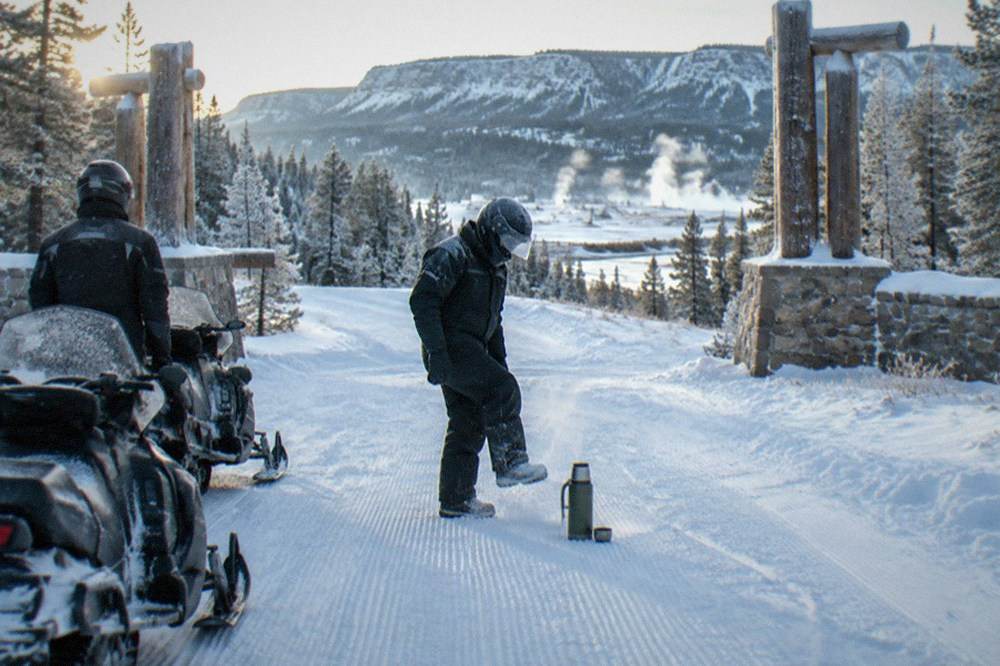
The practical number that matters most to a tour guest is not the thermostat reading, it is the effective temperature on the sled. Wind chill on a moving snowmobile drops exposed-skin comfort rapidly with speed, which is why commercial operators outfit riders with insulated two-piece suits, full-face helmets, and boots as part of the tour package. Riders on guided trips generally bring only their own base and mid layers, wool socks, a neck gaiter, glove liners, and sunglasses. The site's packing guide covers this in detail, but the short version is that the operator supplies the outer armor and the cold supplies the reason for it.
There is a second cold effect that catches visitors off guard: battery drain. NPS guidance notes that cold can kill phone batteries quickly and that cell coverage is unreliable or unavailable across much of the park interior in winter. A phone that reads 80 percent at the morning pickup can be dead by lunch, and relying on it for photos, navigation, or emergencies is a mistake. seasoned winter visitors carry a battery pack in an inside pocket, keep the phone warm when it is not in use, and treat paper maps and the guide's radio as the real safety net.
| Temperature measure | Typical winter value | Source basis |
|---|---|---|
| Daytime range | 0°F to 20°F | NPS winter guidance |
| Average winter highs | 20 to 30°F | NPS winter ecology page |
| Average winter lows | 0 to 9°F | NPS winter ecology page |
| Record low | -66°F, February 9, 1933 | Riverside Ranger Station |
| Cold-drain risk | Phone batteries die quickly in cold | NPS winter safety guidance |
The cold also reshapes what stays open. Warming huts and fuel at Old Faithful, Canyon, Fishing Bridge, and a handful of other locations keep the winter skeleton functioning, while cell coverage remains unreliable across most of the park interior. Planning for the cold, in other words, is planning for the whole day, not the first hour of it.
When Can You Visit, And What Is Open In Winter?
The oversnow season runs roughly mid-December through mid-March, with 2026-2027 dates projected as December 15, 2026 to March 15, 2027 and some interior segments closing March 7-14. Oversnow travel is permitted 7:00 a.m. to 9:00 p.m. daily, except East and South entrances, which open at 8:00 a.m. Winter access is by guided tour or lottery permit only.
The standing NPS rule is that most park roads open to limited snowmobile and snowcoach travel from mid-December to mid-March, with exact dates dependent on snowpack, and the 2026-2027 published schedule follows that pattern: West, South, and East entrances plus remaining groomed roads projected open December 15, 2026, closing March 15, 2027, while Mammoth to Norris closes March 7 and several other segments close March 9-14. The NPS has not confirmed these as final calendar dates, so treat the mid-December and mid-March frame as the rule and check the road status page in-season. The site's dedicated page on visiting Yellowstone in winter and our season dates guide cover the calendar in more depth.
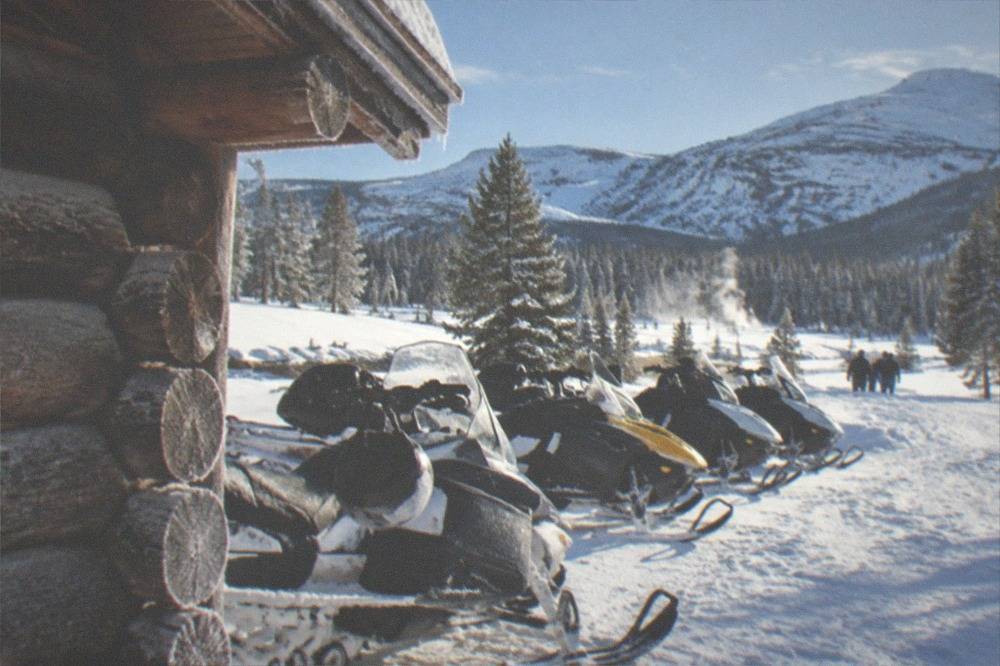
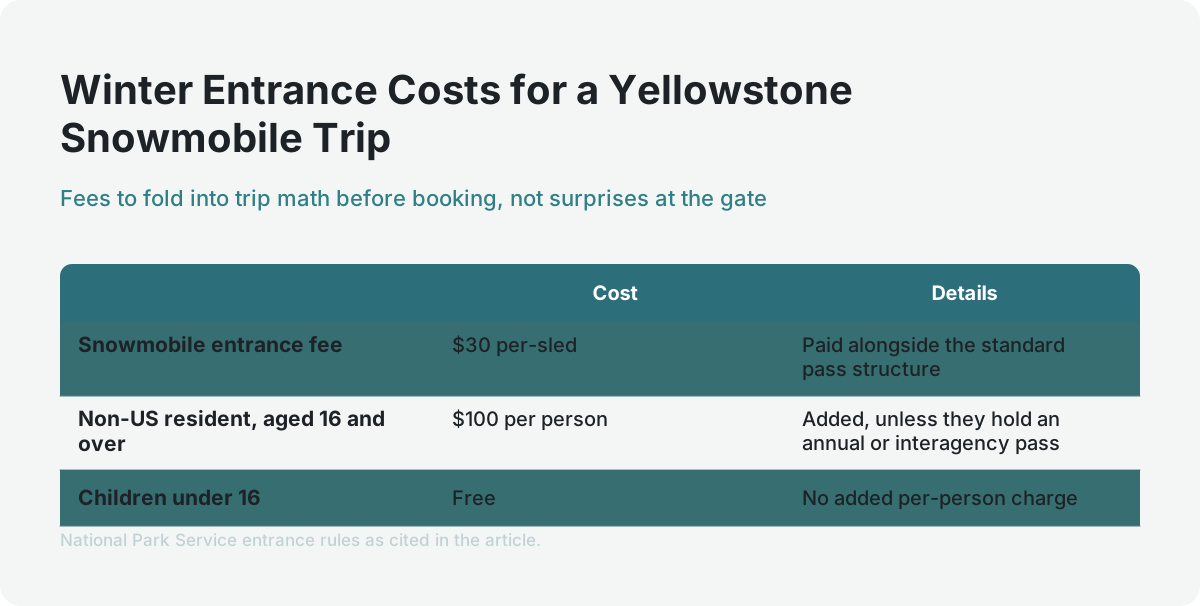
Entrance logistics follow the same seasonal logic. A snowmobile entering the park pays the $30 per-sled entrance fee alongside the standard pass structure, and non-US residents aged 16 and over pay an additional $100 per person unless they hold an annual or interagency pass. Children under 16 are free. These are figures to fold into trip math before booking, not surprises to discover at the gate.
The staggered March closures are worth understanding because they affect late-season trips specifically. A tour in the first week of March has the full groomed network available, while one in the second week of March may find the Mammoth-to-Norris segment already shut and other segments closing on consecutive days through March 15. Groups targeting the tail of the season should confirm which route their tour uses and whether that segment is still scheduled to be open on their date. Early season has a mirror-image uncertainty: the projected December 15 opening holds only if enough snow has accumulated, and recent mild winters have caused late openings in some years.
| Access question | Winter answer |
|---|---|
| Can you drive a car to Old Faithful? | No, interior roads are oversnow only from mid-December to mid-March |
| Which road stays open to cars? | North Entrance to Northeast Entrance, via Mammoth, Tower, and Lamar Valley |
| Daily oversnow hours | 7:00 a.m. to 9:00 p.m.; East and South entrances open 8:00 a.m. |
| Unguided snowmobile entry | Only via the NCGSAP lottery, up to 4 groups per day |
| Season frame | Mid-December through mid-March, snowpack dependent |
Because the season window is short and operator capacity is finite, winter bookings concentrate hard. If you are weighing which month to go, the site's guide to the best month to snowmobile in Yellowstone breaks down snowpack, crowds, and pricing month by month.
How Does Weather Shape A Snowmobile Tour Day?
Weather dictates the tour day more than the itinerary does. Full-day guided snowmobile tours from Jackson run roughly 10 to 12 hours with hotel pickup around 6:00 to 7:30 a.m., snowmobiles on the groomed road by mid-morning, and return by 4:30 to 6:00 p.m., with stops timed around geothermal features and wildlife rather than a fixed clock. Operators watch forecasts, road status, and avalanche bulletins continuously.
The weather inputs are specific. The East Entrance road over Sylvan Pass can close for hours or even days at a time due to avalanche danger, and the park's concession operating plans carry fixed seasonal closures such as the upper viewing platform at Artist Point. Snowfall that is too heavy or too thin can shift grooming schedules. Commercial operators work inside these constraints as a matter of course, which is part of what a guest is paying for: someone else absorbs the weather risk and the logistics. Everything else covered here is indexed on Yellowstone Snowmobile Tours.
Cold also changes the day's rhythm. Daylight travel is recommended, phones die fast, and the sensible pattern is a warm base layer, the operator's insulated suit over it, and regular warm-up stops at the destinations themselves. Riders on the Old Faithful route typically stop at Moose Falls, Lewis Canyon, West Thumb Geyser Basin, and the Fountain Paint Pots on the way to the geyser basin, and a winter eruption of Old Faithful, timed to the roughly 102-minute median interval, is the anchor of the day. The tour itself is the product here, and the weather is the setting that makes it unlike any summer visit.
For the broader run of what the schedule actually feels like hour by hour, see the site's article on what happens on a Yellowstone snowmobile tour. If your dates are flexible and the calendar is the open question, the Yellowstone snowmobile season dates guide is the reference page.
A detail that surprises first-time winter riders is how warm the middle of the day can feel. Standing still on a sunny boardwalk at Old Faithful in a down-mid-layer under the operator's suit, many guests end up unzipping during the lunch stop, then zipping everything back down within minutes of getting back on the sled. The lesson is to treat the day as a series of microclimates: the van is warm, the staging area at the entrance is cold, the ride is coldest of all, and the destination stops are the warm respites. Dressing so you can shed and add a layer quickly, rather than one heavy fixed outfit, is what separates a comfortable day from a miserable one.
What Wildlife And Scenery Does Winter Deliver?
Winter concentrates Yellowstone's wildlife into visible valleys and thermal areas. Common sightings on snowmobile and snowcoach routes include bison, elk, wolves, bighorn sheep, coyotes, foxes, otters, swans, and eagles, with bison herds using groomed roads and thermal clearings and the park's wolf population reported under 84 animals. Snow also makes tracks and pelts far easier to spot.
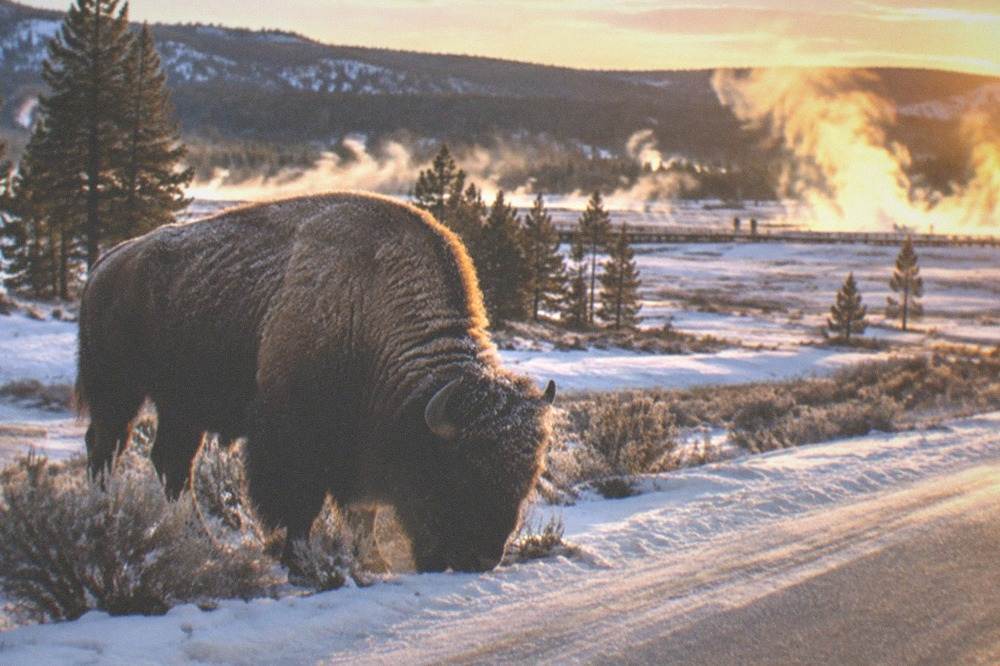
The wildlife reality of winter is different from summer in kind, not just degree. Bison move onto the roads and into the warm ground around geothermal features because snow is shallower there, and wolves show up well against white valleys, which is why winter wildlife photography in the park is a genre of its own. The year-round plowed road through Lamar Valley offers the other main winter wildlife corridor, one reachable by ordinary car, which is a genuine alternative for travelers whose priority is animals rather than the interior geyser basins.
| Species | Winter behavior | Where tours typically see them |
|---|---|---|
| Bison | Herds on roads and thermal ground where snow is thin | Firehole and Madison corridors, geyser basins |
| Wolves | Visible against snow in open valleys | Hayden Valley, northern range |
| Elk and bighorn sheep | Lower-elevation winter range | South entrance route, valley floors |
| Swans and eagles | Open water along rivers | Madison and Firehole river corridors |
| Coyotes, foxes, otters | Active all winter | Varied, often near thermal features |
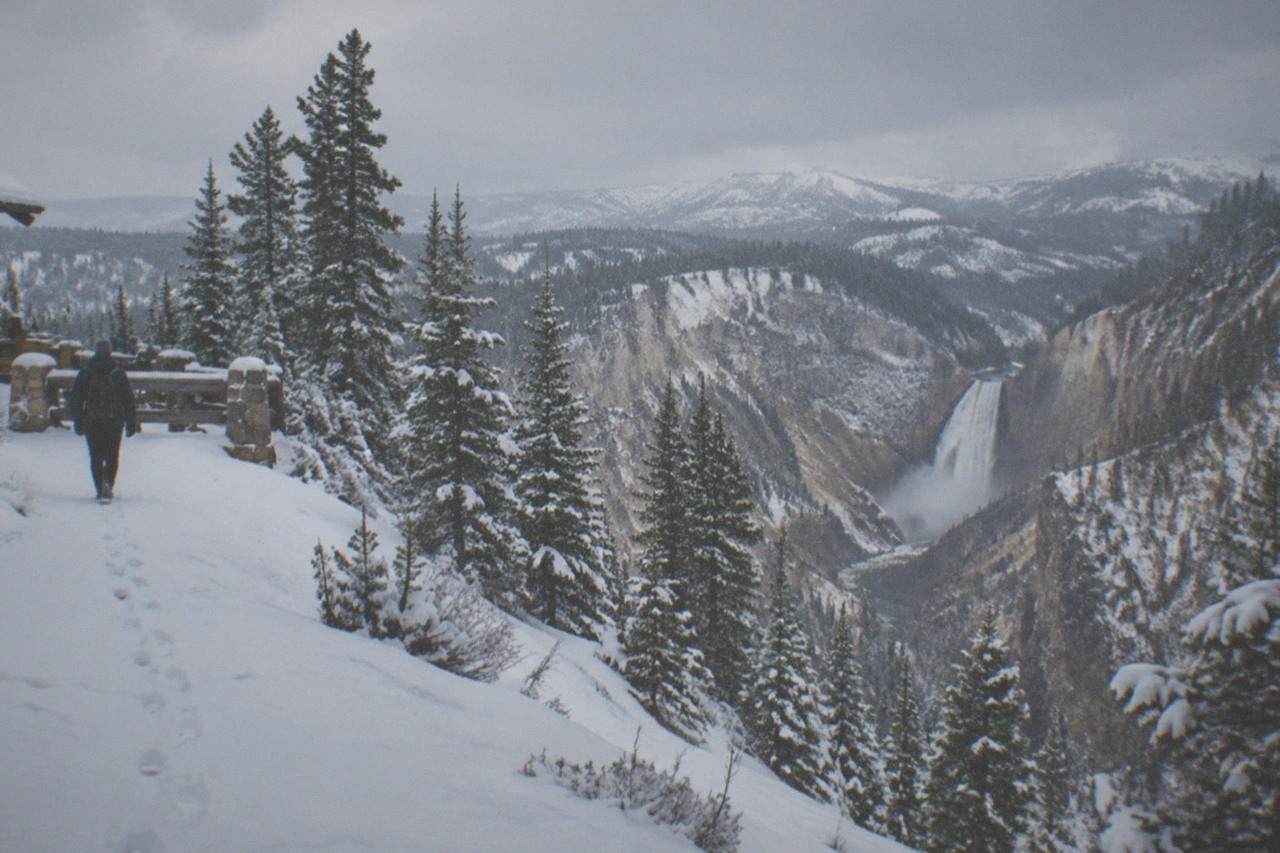
The scenery half of the equation is thermal. Winter steam, ice formations on the Lower Falls, and the frozen color of the Grand Canyon of the Yellowstone walls are the marquee sights of the season, and a snowmobile tour or snowcoach tour reaches them on the same groomed roads summer traffic uses. The trade is simple: winter costs you warm fingers and gives you the park nearly alone.
For travelers who want animals as the headline rather than the bonus, a wildlife-focused day outside the park is another option. A guided snowmobile tour in the Bridger-Teton National Forest near Jackson Hole, such as the Bridger-Teton guided snowmobile tour rated 4.7 across 87 reviews from $350, runs through prime winter habitat without the park's interior.
How Should You Plan Around The Weather?
Plan winter around three levers: gateway town, month, and clothing strategy. Jackson suits combined Tetons trips and hotel-pickup in-park tours, West Yellowstone is the dedicated snowmobile hub, and the oversnow window of mid-December to mid-March narrows every other choice. Book tours and lodging early, since winter capacity is small and the season is short.
The gateway decision is really a weather and logistics decision. Jackson Hole and West Yellowstone sit roughly 115 miles apart in winter, because the direct park route between them closes to cars, so the town you pick determines which tours you can realistically join. This site's comparisons of Jackson Hole versus West Yellowstone and where to stay near a snowmobile tour cover the trade-offs in full. Either way, the case for winter is honest and specific: fewer crowds, thermal steam in cold air, wildlife in snow, and an interior that feels like a different park.
Clothing is the last lever and the easiest to get wrong. The operator supplies the suit, helmet, and boots on a guided tour; the rider's job is the layers underneath: moisture-wicking synthetics or wool, no cotton, heavy wool socks, a neck gaiter or balaclava, glove liners, and sunglasses or goggles. The site's guide on what to wear snowmobiling in Yellowstone has the complete list, and the packing article is the checklist version.
If the deep-cold in-park day sounds like more than your group wants, the near-park alternative is real. The Turpin Meadow snowmobile tour in the Bridger-Teton National Forest, rated 4.9 across 26 reviews from $300, runs 5.5 to 9 hours in the Jackson Hole backcountry, outside the park, with none of the interior driving but plenty of mountain snow.
One last planning note that belongs to winter alone: budget margin. Weather can delay a day, close a segment, or change a route, and the operators who run these tours build that flexibility in. Travelers who do the same, with a spare morning and a backup activity, get the best of the season. That margin is the difference between a trip that survives a storm and one that a storm ruins.
Winter in Yellowstone is not a lesser version of the park. It is the park at its most selective, its quietest, and its most demanding, and the guided tour is the mechanism that makes it accessible. Check current availability on the operator's live listing for the season you are targeting, and plan the cold as seriously as the itinerary.
Common Questions About Yellowstone Winter Weather
How cold does Yellowstone get in winter?
Daytime temperatures typically run 0°F to 20°F, average winter highs sit around 20 to 30°F, and average lows around 0 to 9°F. Sub-zero readings are common at night and higher elevations, and the record low is -66°F at Riverside Ranger Station on February 9, 1933.
Can you drive into Yellowstone in winter?
Only on the North Entrance to Northeast Entrance road through Mammoth, Tower Junction, and Lamar Valley, which stays open to regular vehicles year-round. All other interior roads are oversnow only from mid-December to mid-March, reachable by guided snowmobile or snowcoach tour or a lottery permit.
When is Yellowstone open in winter?
The oversnow season runs roughly mid-December through mid-March, with 2026-2027 dates projected as December 15, 2026 to March 15, 2027 and some interior segments closing March 7-14. Exact dates depend on snowpack, so check the NPS road status page in-season.
What should I wear for a winter Yellowstone tour?
Guided tours supply the insulated suit, helmet, and boots. Bring moisture-wicking base layers, wool or fleece mid-layers, no cotton, heavy wool socks, a neck gaiter or balaclava, glove liners, and sunglasses or goggles.
What wildlife can you see in Yellowstone in winter?
Bison, elk, wolves, bighorn sheep, coyotes, foxes, otters, swans, and eagles are the common winter sightings. Bison herds gather on roads and thermal ground, and the park's wolf population is reported under 84 animals, visible against snow in open valleys.
Is it worth going to Yellowstone in winter?
Yes, if you want thin crowds and a radically different park. A typical January sees about 28,837 visits, roughly 0.72 percent of annual totals, a small fraction of summer traffic, and thermal steam, frozen falls, and wildlife in snow are winter-specific sights. The trade-off is serious cold and oversnow-only access.